Healthy Animals, Wealthy Farms: A Vet Examining Cattle in the Field — Your Complete Guide to Careers in Veterinary & Livestock Science

KAWA Uganda · Career Guidance · Research Post
Healthy Animals, Wealthy Farms: Careers in Veterinary & Livestock Science
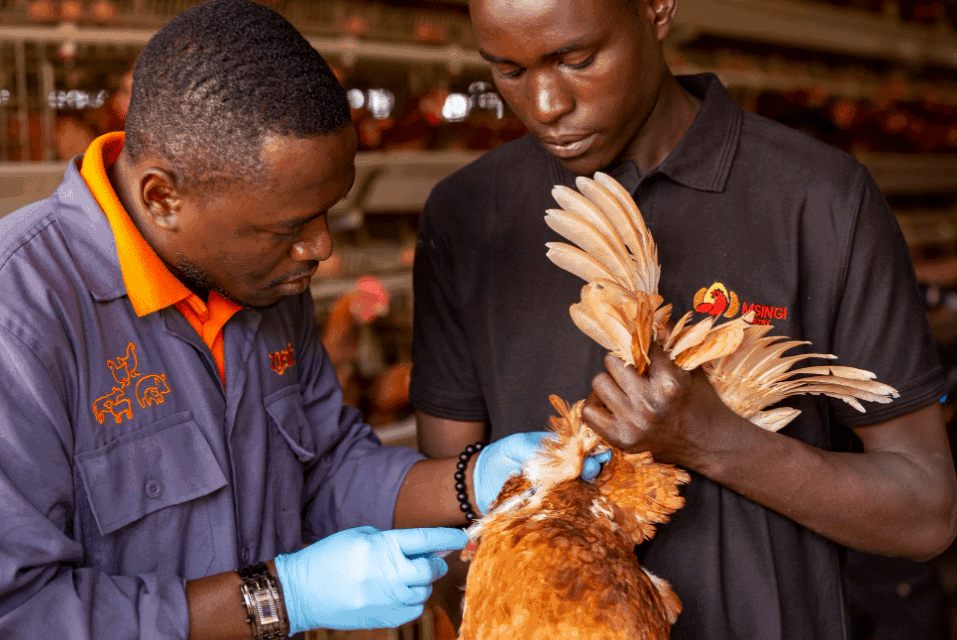
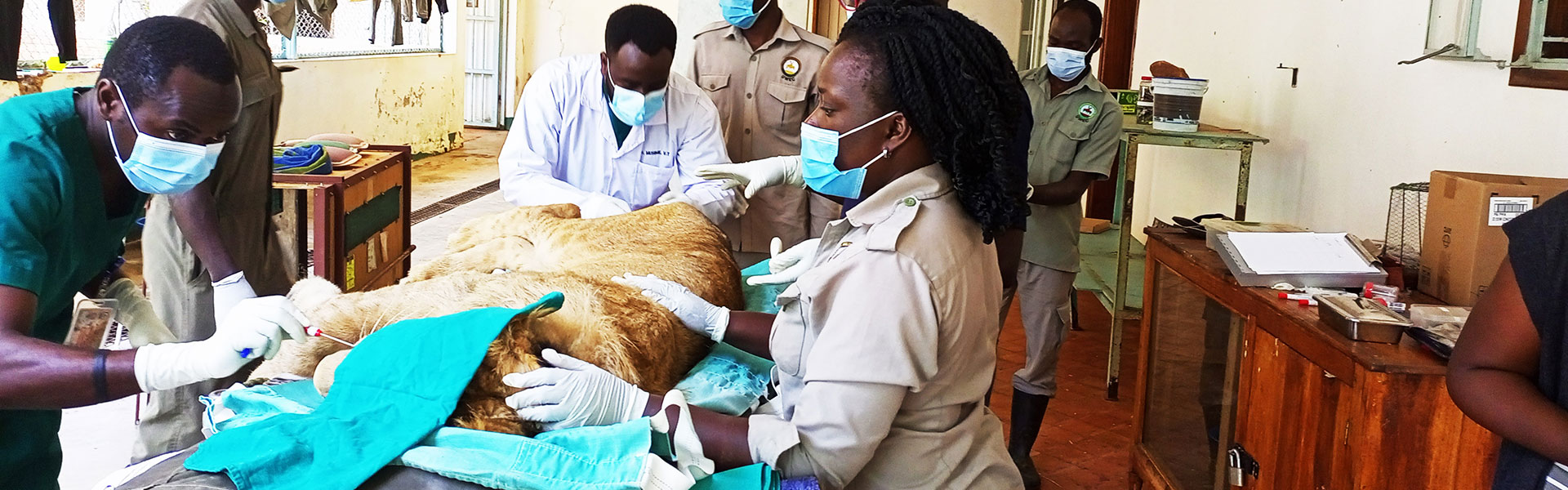
A veterinary professional examining cattle in the field — checking health, spotting disease early, protecting the herd and the farmer’s income. This is animal health, disease surveillance and livestock management in practice. And it is one of Uganda’s most needed science careers.
Start With The Field Exam ↓ Try Symptom Checker 🩺
1. What Is Veterinary & Livestock Science?
Veterinary Science = diagnosing, preventing and treating animal disease. Livestock Science = breeding, feeding, housing and managing animals so they grow, give milk, lay eggs and earn income. Together they protect animals, people and the economy — because many animal diseases can also affect humans. That is called One Health.
A vet in the field is not just “treating a sick cow”. She is a detective, teacher, scientist and business adviser in one visit.
households in Uganda keep livestock — cattle, goats, sheep, pigs or poultry.
cattle, 17.1M goats, 4.4M sheep, 7.1M pigs, 57.8M chickens.
of national GDP from livestock, and ~17% of agricultural value. Cattle are the most valuable.
susceptible animals targeted in Uganda’s 2026 FMD vaccination drive.

 🩺 CASE STUDY — THE FIELD EXAM + THE LAB
2. A Veterinary Professional Examining Cattle in the Field — Step by Step
Scene: Early morning on a farm in the cattle corridor — Mbarara, Nakasongola, Luwero, Karamoja or Teso. The farmer calls: “My cow is not eating, it has fever.” The vet arrives with a kit bag, gloves, thermometer, stethoscope, sampling tubes and a cool box.
The 7-Step Field Exam Every Vet Uses
- History: When did it start? Is it eating? Drinking? Milk dropped? Any other animals sick? Has it been vaccinated? Moved? What feed?
- Distant observation: Posture, breathing, walking, body condition, discharge, dung, isolation from herd. A healthy cow chews cud, stands alert, ears up.
- Restraint & safety: Crush / chute, halter, helper holding tail. Safety for animal, vet and farmer first.
- Hands-on exam: Temperature (normal ~38.5°C), heart rate, breathing rate, lymph nodes under ear & shoulder, mouth, skin, hooves, udder.
- Sample: Blood, dung, milk or swab — labelled with animal ID, date, farm, district. Into cold box.
- Decision: Treat, isolate, vaccinate the rest, or refer to lab. Record everything.
- Teach: Tell the farmer what to watch, what feed/water to give, when to call again. Leave a vaccination plan.
From Field to Lab — Karamoja Story
For years, Karamoja samples travelled 500+ km to Entebbe. Now the refurbished Karamoja Regional Referral Veterinary Laboratory in Moroto has expanded from ~300 samples a month to up to 5,000. It serves Uganda and neighbouring Kenya, South Sudan and Ethiopia, testing for anthrax, brucellosis, rabies, CBPP, FMD and other transboundary diseases. With 【entity-FAO¦canonical_name=FAO】 support through the PLACE project, over 90,000 cattle have been vaccinated against CBPP and FMD after surveys identified priority areas. This is why surveillance matters: no lab result = no trade, no export, no safe market.

Lesson for career guidance: The field exam is where a career is born. A learner 【entity-who¦canonical_name=WHO】 watches a vet, asks “Why did you check the lymph nodes?” and writes down the answer is already doing veterinary science.
3. The 5 Careers Inside Veterinary & Livestock Science
Tap each job to see the full picture. All five work on the same herd — but each has a different superpower.
🩺 1. Veterinary Doctor / Veterinary Surgeon — The Animal Doctor
5 YEARS + INTERNSHIPMAKERERE ONLY FOR BVM
What they do: Diagnose, prevent and treat animal disease, support livestock health, food safety, reproduction, disease surveillance and farm productivity. Perform surgery, assist difficult births, certify meat for export, advise on vaccination.
A day: 7am — farm visit, examine 3 sick cows. 10am — vaccinate 80 cattle in a crush. 1pm — lab results call: CBPP positive, isolate herd. 3pm — clinic: dog with wound, goat with bloat. 5pm — write reports for District Veterinary Officer.
Skills: Biology, Chemistry, calm under pressure, handling animals, communication, record-keeping, ethics.
Training: Bachelor of Veterinary Medicine (BVM) — 5 years at Makerere University, College of Veterinary Medicine, Animal Resources and Biosecurity (COVAB). After degree, 12-month internship, then registration with Uganda Veterinary Council under the Veterinary Practitioners Act, 2024. Masters: Veterinary Medicine (Food Animal Health & Production), Epidemiology, Wildlife Health, etc.
Employers: District Local Government (Veterinary Officer), Ministry of Agriculture (MAAIF), NARO / NaLIRRI, private clinics, NGOs (Mercy Corps, DRC, 【entity-FAO¦canonical_name=FAO】, 【entity-World Vision¦canonical_name=World Vision】), meat processors, poultry companies (Uzima Chicken), research, wildlife / Kibale Field Station.
🧑🏾🌾 2. Veterinary Paraprofessional / Animal Health Officer — The Frontline Hero
DIPLOMA / CERTIFICATEMOST NEEDED IN VILLAGES
What they do: First contact for farmers. Vaccinate, deworm, treat common diseases, advise on feeding and housing, collect samples, report outbreaks to the DVO. 【entity-FAO¦canonical_name=FAO】 calls VPPs critical for delivering animal health services to smallholders.
A day: Ride to 3 villages, vaccinate goats against PPR, deworm calves, check a dairy cow’s udder, teach a farmer group about tick spraying, phone the DVO about a suspected anthrax case.
Skills: Practical animal handling, local language, motorbike, phone / data, trust-building.
Training: Diploma / Certificate in Animal Health & Production, Animal Production Technology, or Animal Health Management. Offered at Bukalasa Agricultural College, Ssese Farm Institute, Busitema University (Arapai, Soroti), Bishop Stuart University (Mbarara), Ankore Western University, and other recognised institutions. Degree option: BSc Animal Health Management / Livestock Management.
Employers: District veterinary departments, NGOs, private vet drug shops / agro-vets, cooperatives, large farms, 【entity-FAO VPP¦canonical_name=FAO】 projects.
🔬 3. Epidemiologist / Disease Surveillance & Lab Scientist — The Disease Detective
LAB + FIELD【entity-FAO¦canonical_name=FAO】 / MAAIF / NARO
What they do: Track where disease is, where it is moving, and what vaccine will work. Test samples, map outbreaks, advise on quarantine and movement controls, protect trade.
A day: Receive 120 blood samples from Moroto, test for FMD / CBPP / RVF, enter results, map hotspots, alert DVOs, write a bulletin for MAAIF’s Quarterly Animal Health Bulletin.
Skills: Microbiology, data, mapping, report writing, cold-chain discipline.
Training: BVM or BSc Biomedical / Animal Science → MSc Veterinary Epidemiology, Public Health, or Laboratory Science. PhD for senior research (e.g. Dr Halid Kirunda, Chair of Uganda Veterinary Council, PhD Veterinary Epidemiology).
Employers: Central Diagnostic Lab Entebbe, Karamoja Regional Lab, MAAIF, 【entity-FAO¦canonical_name=FAO】, 【entity-WHO¦canonical_name=WHO】 / One Health programmes, universities, research institutes.
🐄 4. Livestock Officer / Animal Production Officer — The Herd Builder
PRODUCTION + VALUE CHAINNGO / DISTRICT / PRIVATE
What they do: Improve production — feed formulation, breeding, herd size, housing, milk hygiene, market linkage. Work on poultry, piggery, goat and dairy value chains, especially climate-smart livestock.
A day: Visit a women’s goat group in Bidi Bidi, train on feed and housing, check kids’ growth, link group to a buyer, record weights in a book / app.
Skills: Animal nutrition, breeding, economics, community work, training.
Training: Bachelor’s in Animal Production, Animal Science, Livestock Production, Veterinary Medicine or related field. Makerere: Bachelor of Animal Production Technology and Management (3 years), Bachelor of Livestock Industry and Business, Bachelor of Wildlife Health and Management.
Employers: Mercy Corps (Apolou Activity, Karamoja), DRC, World Vision, district production departments, dairy cooperatives, poultry companies.
🥛 5. Dairy Herd Manager / Ranch / Poultry Farm Manager — The CEO of the Herd
BUSINESS + LEADERSHIPFARMS / PROCESSORS
What they do: Run the farm as a business. Plan feeding, breeding, milking, labour, health, records, sales. On a dairy farm: herd health, milk targets, feeding programme, team of farm hands. On poultry: biosecurity, SOPs, out-growers.
A day: 5am — milking supervision, check milk yield. 8am — assign labour, check feed. 11am — vet visit for sick cow. 2pm — update costs and sales. 4pm — meet milk buyer / processor.
Skills: Budgeting, leadership, negotiation, record-keeping, biosecurity.
Training: Diploma / Degree in Animal Production, Agribusiness, Farm Management, Livestock Industry & Business. Many managers start as paraprofessionals or livestock officers and grow into management.
Pay guide (research, not a promise): Entry mixed-practice vet roles are advertised around UGX 0.8–1.8M per month depending on location and employer; senior district / NGO / private managers earn more. Always check the actual job advert. Pay varies by employer, district, farm size and experience.
| Career | Best Subjects in S.5/S.6 | First Qualification | Where to Start |
|---|---|---|---|
| Veterinary Doctor | Biology, Chemistry, Agriculture, Math | BVM — 5 years, Makerere | District, Clinic, NGO, Research |
| Paraprofessional / Animal Health Officer | Biology, Agriculture, Chemistry | Certificate / Diploma Animal Health | District, Agro-vet, NGO, Farm |
| Epidemiologist / Lab Scientist | Biology, Chemistry, Math | BVM / BSc → MSc Epidemiology | Lab, MAAIF, FAO |
| Livestock Officer | Biology, Agriculture, Entrepreneurship | BSc Animal Production | NGO, District, Cooperative |
| Dairy / Ranch / Poultry Manager | Biology, Agriculture, Economics | Diploma / BSc Livestock Business | Dairy, Ranch, Poultry Farm |
 🦠 DISEASE SURVEILLANCE — KNOW THE ENEMY
4. Disease Surveillance: Why One Sick Cow Can Close a Market
Uganda experiences 17 to 37 FMD outbreaks annually. FMD, CBPP, Lumpy Skin Disease (LSD), PPR, East Coast Fever (ECF), Anthrax, Brucellosis and Rabies are not just animal problems — they close markets, block beef export, and cost farmers millions.
| Disease | Animals | Signs to Spot | Control |
|---|---|---|---|
| Foot-and-Mouth Disease (FMD) | Cattle, goats, sheep, pigs | Blisters on mouth / feet, drooling, lameness, fever | Vaccinate every 6 months, movement control, surveillance |
| CBPP | Cattle | Cough, difficult breathing, fever, nasal discharge | Vaccinate annually, isolate, lab test |
| Lumpy Skin Disease (LSD) | Cattle | Fever, nodules on skin, swollen lymph nodes | Vaccinate annually before insect season |
| East Coast Fever (ECF) | Cattle, esp. exotic / crosses | High fever 41°C, swollen lymph nodes, loss of appetite, breathing difficulty | Weekly tick spraying, ITM vaccination, new anti-tick vaccine NAROVAC-ATV1 |
| PPR | Goats, sheep | Fever, eye/nasal discharge, diarrhoea | Vaccinate, target elimination by 2030 |
| Anthrax / Brucellosis / Rabies | All livestock + humans | Sudden death, abortion, aggression / paralysis | Vaccinate, report immediately, One Health response |
🩺 Try It: Animal Health Symptom Checker — For Learning Only
Select what you see. This is NOT a diagnosis. Always call your District Veterinary Officer / nearest vet.
Cold chain rule: Vaccines must stay cold from lab → district → crush. A warm vaccine is a dead vaccine. That is why vets carry cool boxes, ice packs and thermometers — and why lab and logistics careers matter too.
 🐄 LIVESTOCK MANAGEMENT — FROM ANKOLE TO DAIRY
5. Livestock Management: Breeds, Feed, Housing & Records
Uganda’s cattle corridor — from the southwest (Mbarara, Kiruhura) to the northeast (Karamoja, Teso) — is home to Ankole long-horned cattle, Zebu, Boran, Friesian crosses and local breeds. Good management is not luck. It is daily discipline.

| Management Pillar | What Good Looks Like | Who Leads It? |
|---|---|---|
| Feed & Water | Pasture + hay / silage, mineral lick, clean water daily. Dairy cow needs 60–100L water/day. | Livestock Officer + Farm Manager |
| Breeding | Record heat, use AI or good bull, avoid inbreeding, tag calves at birth. | Vet + Manager |
| Housing & Hygiene | Dry, ventilated kraal / barn, clean milking area, footbath, waste management. | Farm Manager |
| Health & Vaccination | Vaccination calendar, deworming, tick control, isolation pen for sick animals. | Vet + Paraprofessional |
| Records & Marketing | Animal ID, birth, vaccine, milk yield, costs, sales. Tagging = traceability = trade. | Manager + Officer |
🥛 Dairy Profit Calculator — Try It!
Enter your dairy plan. Learning tool — real profit depends on feed cost, milk price, health and breed.
6. Watch & Learn — Photos & Videos From Real Fields
Watch these before your next school farm lesson. They show exactly what vets and livestock officers do.
How a vet performs a full physical exam — step by step.
Why vaccines don’t reach farmers — and how to fix it (WOAH / GALVmed).
Mass FMD vaccination drive — what it looks like in practice.
Why communal herds are prioritised in vaccination campaigns.
🎥 Real Ugandan Farmer & Vet Reels — Tap To Watch
Videos are from YouTube, Instagram and Facebook creators. KAWA shares them for learning. Always check the creator’s page for the latest version.
7. For Learners, Schools, Teachers & The General Public
🎓 For Learners — Your Pathway
- In S.3–S.4: Take Biology, Chemistry, Agriculture seriously. Keep a goat / chicken at home if you can. Record weight, feed, health in a book.
- In S.5–S.6: Choose PCB (Physics, Chemistry, Biology) or BCA (Biology, Chemistry, Agriculture) for BVM. Volunteer at a vet clinic or district veterinary office in holidays. Ask a vet to mentor you.
- After S.6: Certificate in Animal Health → Diploma in Animal Health & Production → Degree in Veterinary Medicine (Makerere) OR BSc Animal Production / Livestock Business → MSc if you want research / epidemiology.
- No degree? No problem: Many paraprofessionals start with a Certificate / Diploma + field experience. Skills + trust + record matter more than paper alone. But to be called “Veterinary Doctor”, you must do BVM + internship + registration.
✨ Quick Career Quiz — Which Job Fits You?
Tap what you love most:
🏫 For Schools — Set Up a School Livestock Project in 7 Steps
- Choose 2–5 goats or 20–50 layers (start small). Get permission, a safe pen, water and feed plan.
- Divide class into 4 teams: Health, Feeding, Records, Marketing.
- Invite DVO / vet to do a farm visit and teach the 7-step exam.
- Tag animals, weigh weekly, record feed, health, costs.
- Make a vaccination calendar with the vet — display it on the wall.
- Sell eggs / milk / kids, calculate profit with the calculator above.
- Hold a Field Day — let learners present to parents and the DVO.
👩🏾🏫 For Teachers — 5 Ready Lesson Ideas
- Biology: Digestive system of a cow (ruminant) vs goat vs chicken — why feed differs.
- Chemistry: Vaccine cold chain — why temperature matters, test with ice + thermometer.
- Geography: Cattle corridor — climate, pasture, water, disease and trade routes.
- Math: Milk yield, feed cost, profit calculation, vaccination coverage %.
- English / Entrepreneurship: Write a livestock business plan and pitch it to a “buyer” (another class).
👨👩👧 For Parents & General Public — How To Support / Enter
- Parents: Visit a vet clinic / DVO office with your child. Ask: “What subjects? What cost? What jobs after?” Let them try the field first — don’t push a course they hate.
- School leavers: Start as a farm assistant / vaccination campaign volunteer. Get a Certificate in Animal Health. Build a portfolio: photos of herds you helped, records, vaccination lists.
- Working adults: Short courses in dairy management, poultry biosecurity, AI (artificial insemination), meat inspection. Many NGOs run low-cost training in Mbarara, Karamoja, Luwero and Kampala.
- Entrepreneurs: Agro-vet shop, feed mill, milk collection, AI service, poultry hatchery, meat processing, vet drug distribution — all are careers around the animal, not just on the farm.
- Farmers: Always use a registered vet / paraprofessional. Never buy drugs from unlicensed sellers. Keep vaccination cards. Report sudden deaths immediately — it protects your herd and your neighbours.
8. Where To Train in Uganda — KAWA Links
Confirm current programmes, fees and intake directly with the institution before applying. Some KAWA profiles were published in 2016.
Top Veterinary & Livestock Universities in the KAWA Directory
- Makerere University — BVM (5 yrs), Animal Production, COVAB
- Busitema University — Arapai, Animal Health
- Bishop Stuart University — Mbarara, Animal Health
- Mbarara University of Science and Technology
- Gulu University
- Kyambogo University
Start With These KAWA Career Guidance Pages
- Agriculture, Food & Natural Resources — Career Field
- The 16 Careers Clusters
- Training Institutions in Uganda
- Scholarships
- Admission Requirements & Choice of School
- KAWA Career Guidance Handbook
📚 See Full KAWA Directory — All Handbook, Fields, Training & Universities (72 Links)
Handbook: Introduction · Executive Summary · Chapter 1 · Chapter 2 · Chapter 3 · Chapter 5 · Career Pathways
Career Fields: Health · ICT · STEM · Business · Hospitality · Education · Law · Finance · Architecture · Arts · Manufacturing · Marketing · Government · Human Services
Training & Funding: Recognized Institutions · List of Universities · Private Colleges · Minister’s Message · Commissioner’s Message · President’s Message
Universities: African Bible · African Renewal · African Rural · Aga Khan · All Saints Lango · Bishop Barham · Bishop Stuart · Bugema · Busoga · Cavendish · IHSU · IUEA · Islamic Call · IUIU · Kabale · KIU · Kampala University · Kumi · Livingstone · Mountains of Moon · Muteesa I · Ndejje · Nkumba · Nsaka · St Augustine · St Lawrence · UCU · UMU Nile Campus · Pentecostal · UTAMU · University of Kisubi · Victoria · Virtual University · Featured: Lab to Life-Saving · Live Blog Archive
9. Questions Learners Always Ask
Do I need to be from a farming family to succeed?
No. Most vets and livestock officers learned animal handling at school, on a farm visit, or on a first job. What matters is curiosity, care for animals, and willingness to be in the field.
Is veterinary work only for boys?
No — women lead vet teams, run dairy farms, manage labs and lead vaccination campaigns in Karamoja, Mbarara and Luwero. KAWA encourages girls to take PCB / BCA and join school livestock projects.
Can I be a vet without a degree?
You can be a paraprofessional / animal health officer with a Certificate / Diploma. To be called a Veterinary Doctor / Surgeon, you must complete BVM + internship + registration with Uganda Veterinary Council. Both roles are needed — and both are respected.
What if I have no money for university?
Start with Certificate / Diploma, volunteer at vaccination campaigns, apply for scholarships on the KAWA Scholarships page, and look for NGO / district training. A strong field record often opens doors.
Sources & Further Reading (Research)
- Uganda Veterinary Council — Training Standards & Registration: uvc.or.ug
- Makerere University COVAB — BVM, Animal Production, Wildlife Health: svar.mak.ac.ug
- Ministry of Agriculture (MAAIF) — FMD Vaccination, Animal Health Bulletin: agriculture.go.ug
- 【entity-FAO Uganda¦canonical_name=FAO】 — Livestock, PLACE Project, Karamoja Lab: 【entity-fao¦canonical_name=FAO】.org/uganda
- Karamoja Regional Veterinary Lab — Disease Surveillance: Chimpreports — Karamoja Lab
- Uganda Bureau of Statistics — National Livestock Census 2021: ubos.org
- KAWA Career Guidance Handbook & Directory: KAWA Handbook
Research note: Salary and profit figures are guides from job adverts and farmer reports, not guarantees. Symptom checker is for learning only — never treat or diagnose alone. Always confirm with a registered vet / DVO. Photos are for illustration from public sources — veterinary field work, cattle, dairy and poultry in Uganda / East Africa.
Your Turn: Visit a Vet / DVO Office This Week.
Ask your teacher to invite a vet to school. Watch one field exam. Write down 5 signs of a healthy cow. Share it with one friend. That is how a career starts.


Comments
Post a Comment