
Architecture & Construction
Designing, measuring, costing, building and maintaining the built environment—from houses and schools to roads, bridges, railways, drainage, commercial spaces and the cities of the future.
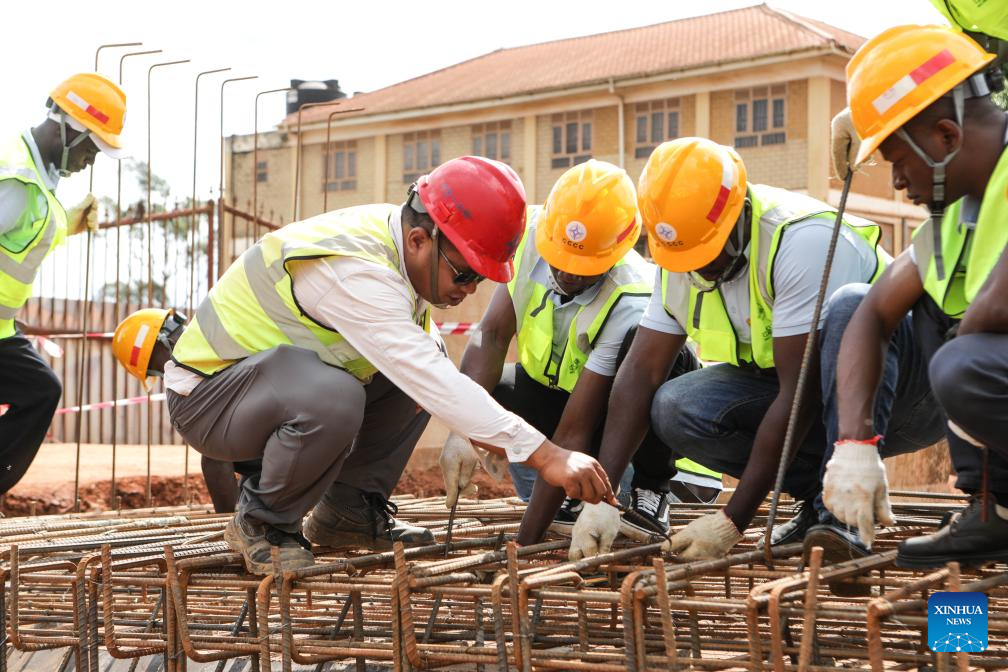
The built environment needs both professionals and skilled tradespeople
Architecture and Construction includes people who imagine and plan projects, professionals who measure and cost them, engineers who design safe structures and infrastructure, managers who coordinate construction, and skilled craftspeople who physically build, install and finish the work.
Successful people in this cluster usually develop accuracy, practical problem-solving, spatial thinking, communication, mathematics, science, digital design skills and a strong respect for safety and quality.
Current evidence is better framed around the active infrastructure and urbanisation agenda. Construction remains important for jobs and development, but no qualification guarantees employment. Practical competence, professional registration where required, experience, safety, digital skills and enterprise ability still matter.
A construction project is a team effort
Real photographs from construction, training and infrastructure
Architecture, Design & Planning
Architecture students working with drawings, physical models and design prototypes at Makerere University's CEDAT.
Surveying, Geomatics & Land Information
A surveyor using a levelling instrument on a real construction site in Mukono District.
Masonry, Bricklaying & Concrete
Trainees practising bricklaying at Nakawa Vocational Training College.
Plumbing & Water Systems
Young trainees measuring and preparing PVC pipe during practical plumbing training.
Roofing, Carpentry & Shopfitting
Roofers erecting timber roof trusses on a building in Kampala.
Tiling, Finishes & Interiors
Students laying ceramic floor tiles during practical vocational training.
Painting & Plastering
A professional painter at work, showing a practical construction trade open to women and men.
Welding & Structural Fabrication
Trainees practising welding and fabrication in a vocational workshop.
Roads, Highways & Pavements
A road crew paving and compacting asphalt on a road project in Wakiso.
Bridges & Civil Engineering
Civil works on the Isimba Bridge show concrete, structural systems, lifting equipment and site supervision.
Railway Construction
Rail crews renewing track, sleepers and turnout components.
Reinforced Concrete & Structural Steel
Trainees learning rebar tying under engineering supervision on a construction site.
Construction Management & Site Supervision
Students measuring and checking a fabricated frame during practical construction training.
Quantity Surveying & Building Economics
Built-environment students discussing technical drawings and adaptive-reuse design.
Specialist Fabrication & Composites
Students using machines in a practical vocational workshop. Specialist fabrication can involve moulds, plastics, composites and precision tools.
Search the careers in this cluster
Architect
Designs buildings and spaces, balancing function, safety, sustainability, culture and aesthetics.
Architectural Draughtsperson
Produces architectural and technical drawings using manual and digital drafting tools.
Architectural Technician
Supports architects with drawings, details, specifications, models and coordination.
Interior Decorator
Selects and arranges finishes, furniture, colour, lighting and decorative elements.
Architectural Metalworker
Fabricates doors, railings, frames, fixtures and other metal components for buildings.
Interior Designer
Plans functional and attractive interior spaces using layouts, finishes, furniture and lighting.
Interior Architect
Designs interior spatial systems and building elements, often involving services coordination.
Landscape Architect
Designs outdoor spaces and public environments to be functional, resilient and attractive.
Landscape Contractor
Constructs and maintains designed landscapes, gardens and outdoor works.
Architectural Model Maker
Builds physical or digital scale models that communicate architectural ideas.
Urban & Regional Planner
Plans land use, settlements, transport, services and development at neighbourhood, city and regional level.
Locksmith
Installs, repairs and services locks, keys and access-control hardware.
Monumental Mason
Cuts, shapes, engraves and finishes stone for monuments and decorative work.
Paint Technologist
Studies paint composition, performance and application and helps improve coating products.
Painter
Prepares and coats interior and exterior surfaces using appropriate paints and finishes.
Plasterer
Applies and finishes plaster or render on walls, ceilings and other building surfaces.
Plateworker / Boilermaker
Fabricates and repairs tanks, vessels and heavy structures from steel plate and sections.
Property Developer
Identifies, organises, finances and coordinates property-development projects.
Plumber
Installs, tests and repairs water-supply, drainage, sanitation and related pipe systems.
Quantity Surveyor
Manages construction costs, quantities, procurement, contracts and financial control.
Railway Track Worker
Builds, aligns, repairs and maintains railway track, sleepers, turnouts and related infrastructure.
Road Construction Worker
Carries out earthworks, drainage, paving, asphalt, concrete and other road-building operations.
Road Safety Engineer
Designs and reviews road systems to reduce crashes and improve safe movement.
Road Surface Worker
Repairs and maintains road surfaces, runways and related paved or unpaved areas.
Rigger
Sets up lifting gear, cables and hoisting systems for moving heavy components safely.
Roofer
Builds, installs, repairs and waterproofs roof structures and coverings.
Shopfitter
Fabricates and installs counters, shelves, display systems, partitions and commercial fittings.
Formwork / Shuttering Artisan
Builds temporary moulds that hold wet concrete until structural elements gain strength.
Stonemason
Cuts and lays stone such as granite, marble and limestone for structures and finishes.
Tiler
Measures, cuts, lays and finishes tiles on floors, walls and other surfaces.
Welder
Joins and repairs metal parts using approved welding processes and safety procedures.
Boiler Fitter
Installs, fits, maintains and repairs boilers and related pressure-system components.
Boilermaker
Fabricates and repairs steel tanks, pressure vessels, boilers and heavy platework.
Bricklayer / Mason
Constructs and repairs walls and other masonry structures using blocks, bricks and mortar.
Building Contractor
Executes construction work under contract, coordinating labour, materials, equipment and subcontractors.
Building Inspector
Checks construction against approved plans, safety requirements, codes and standards.
Construction Manager
Plans and coordinates schedules, people, contracts, costs, quality and site operations.
Building Surveyor
Assesses building condition, defects, maintenance needs, compliance and refurbishment requirements.
Civil Engineer
Designs and supervises infrastructure such as buildings, roads, bridges, drainage and water systems.
Fibreglass / Composite Fabricator
Produces moulded composite products using resins, fibres, moulds and finishing techniques.
Land Surveyor / Geomatics Engineer
Measures land and infrastructure using total stations, GNSS, levels, GIS and geospatial technologies.
Structural Engineer
Designs and checks load-bearing structural systems for strength, stability, durability and safety.
Site Engineer
Coordinates technical construction activities on site and checks work against drawings and specifications.
Construction Safety Officer
Identifies hazards and supports occupational health and safety on construction sites.
BIM / Digital Construction Technician
Uses Building Information Modelling and digital coordination tools to manage building information.
Geotechnical Engineer
Studies soils, foundations, slopes and ground conditions to support safe infrastructure design.
Materials / Concrete Technician
Tests construction materials such as concrete, aggregates, soils and steel for quality compliance.
Steel Fixer
Cuts, bends and fixes reinforcement bars according to structural drawings before concrete is placed.
Do not rely on one old list of A-Level combinations
Architecture, engineering, surveying, quantity surveying and technical programmes do not all weight subjects the same way. Identify the exact programme first and check the current admission requirements before choosing or changing subjects.
Degree, diploma and certificate pathways
Verify the exact programme before applying
Videos for learners and teachers
Kyambogo University buildings through student models
A visual look at civil-engineering students interpreting and modelling real university buildings.
Karuma Bridge rehabilitation works
UBC footage connects civil engineering, inspection and bridge rehabilitation to a real national infrastructure asset.
Nakawa national skills competition
Students from different parts of the country demonstrate practical vocational skills at Nakawa.
Nakawa students: Skills for Success
Learners from Nakawa Vocational Training College explain how vocational training supports work and income generation.
President Museveni on practical skilling
A wider message connecting hands-on competence with employment, production and self-employment.


One of my friends at Trinity College Nabbingo used this information and got a good course
ReplyDeletehi
ReplyDeleteInsightful post highlighting how architecture and construction blend creativity with practicality. It’s clear that successful projects depend on strong design concepts, material choices, and execution—something widely emphasized in the industry. As construction continues evolving with new technologies and sustainability trends, upgrading skills is essential. For professionals looking to grow, explore advanced learning opportunities at AIT Extension to stay competitive and innovative in this field.
ReplyDelete