
Manufacturing Careers in Uganda
Turning raw materials, ideas and technology into useful products. Explore production, engineering, food processing, logistics, quality, maintenance, safety, TVET, automation and entrepreneurship.
Manufacturing in Uganda at a Glance
Which Manufacturing Pathway Sounds Like You?
Choose the statement that feels closest to you. You can try several.
Follow a Product From Idea to Customer
Tap each stage to see why it matters.
Beyond the Factory Floor: 5 Surprising Truths About Uganda’s Manufacturing Transformation
Manufacturing is no longer best understood as a row of people performing repetitive manual tasks. Uganda’s industrial story increasingly combines value addition, regional trade, laboratories, engineering, supply chains, digital systems, skilled technicians and product design.
The growth story needs accurate data
Older career materials sometimes repeat a claim that manufacturing output grew by more than 10% every year for five years. The detailed article below explains why that should not be used as a current statistic without a supporting data series. Recent preliminary data cited in the source place growth of the whole industry sector at about 6.4% in FY2025/26, not manufacturing alone.
Manufacturers can think beyond Uganda
Uganda’s membership in COMESA and its wider regional connections mean that firms can design products for cross-border markets. That raises the importance of quality, packaging, logistics, standards, pricing and reliable production.
Manufacturing is far more diverse than textiles
Opportunities extend across food processing, pharmaceuticals, chemicals, electrical products, plastics, packaging, construction materials, furniture, garments, engineering products and increasingly digital and automated systems.
The “invisible architects” matter
Factories depend on production planners, industrial engineers, logistics officers, inventory controllers, quality professionals, safety staff, maintenance technicians and process developers. Manufacturing is as much about flow and systems as it is about physically making an item.
From pipes to pastries, the career map is wide
Engineering remains important, but manufacturing also needs food scientists, bakers, designers, ICT specialists, laboratory personnel, warehouse teams, artisans and entrepreneurs. Creative ability can contribute to product design, packaging and industrial aesthetics.
Introduction: Manufacturing Is All Around Us
Almost every product used at home, school or work has passed through some form of manufacturing.
The exercise book used by a learner may have started as timber, recycled paper or imported paper rolls. The school uniform began as cotton, thread or fabric. A packet of maize flour began with grain supplied by farmers. A plastic water pipe began as raw plastic material that was heated, shaped, cooled, tested and packaged. A metal classroom desk required design, measurement, cutting, welding, painting, inspection and delivery.
Manufacturing is therefore much wider than simply “working in a factory.” It brings together science, engineering, creativity, business, technology, safety, environmental protection, logistics and practical craftsmanship.
An illustrative scenario
Imagine a dairy-processing company receiving fresh milk early in the morning.
Before that milk becomes yoghurt, many people contribute:
- A procurement officer coordinates with milk suppliers.
- A laboratory technician tests the milk.
- A refrigeration technician keeps it at the correct temperature.
- A machine operator runs the processing equipment.
- A food scientist develops the yoghurt formulation.
- An electrical technician maintains the motors and control panels.
- A quality-control officer checks hygiene, taste, acidity and packaging.
- A production planner decides how much yoghurt should be produced.
- A storekeeper monitors cups, labels, sugar and other materials.
- A safety officer checks working conditions.
- A driver and logistics team deliver the final product.
A single yoghurt cup can therefore represent more than ten different careers.
What Is Manufacturing?
Manufacturing is the organised process of converting raw materials, ingredients or components into intermediate or finished products.
This conversion may use:
- Human skill and craftsmanship.
- Hand tools and workshop equipment.
- Industrial machines.
- Chemical or biological processes.
- Computer-controlled systems.
- Electricity, heat, pressure or refrigeration.
- Product design and engineering.
- Quality and safety procedures.
Raw materials, intermediate products and finished products
Raw materials are the starting materials. Examples include milk, cotton, timber, steel, clay, maize, hides, fruits, chemicals and plastic resin.
Intermediate products have been processed but will be used to make another product. Examples include flour, fabric, sheet metal, leather, timber boards, machine parts and packaging materials.
Finished products are ready for use or sale. Examples include bread, school uniforms, furniture, medicines, roofing sheets, soap, shoes, electrical cables and packaged juice.
A typical manufacturing journey
A product normally moves through the following stages:
Identifying a need → designing the product → selecting materials → purchasing inputs → receiving and inspecting materials → producing or assembling → checking quality → packaging and labelling → storing → distributing → collecting customer feedback → improving the product
Every stage creates career opportunities.
Why Manufacturing Matters
Manufacturing adds value to resources. Instead of selling raw maize alone, it can be processed into flour, animal feeds, breakfast cereals or industrial starch. Cotton can become yarn, fabric, uniforms and medical textiles. Fruits can become juice, dried fruit, jam, sauce or concentrate.
Uganda’s Fourth National Development Plan for 2025/26–2029/30 places sustainable industrialisation at the centre of efforts to raise household incomes, create employment and expand value addition. One of its main objectives is to strengthen the private sector so that it can create more jobs. The accompanying Human Resource Development Plan identifies the need to create about 4.4 million new jobs across the economy during the five-year period. (National Planning Authority)
An important statistical correction
The statement that manufacturing output has been growing by more than 10 per cent every year for five consecutive years should not be presented as a current fact without a specific supporting data series.
Preliminary figures for the 2025/26 financial year show that the entire industry sector, which includes manufacturing, construction, mining, electricity and related activities, expanded by approximately 6.4 per cent and contributed about 24.1 per cent of gross domestic product. Manufacturing was among the activities supporting industrial growth, but the 6.4 per cent figure should not be described as manufacturing growth alone. (Finance Uganda)
Agro-industrial activities remain especially important. Recent sector information indicates that agriculture-related processing contributes about 60 per cent of manufacturing output, with food processing and beverages forming major components. This makes manufacturing relevant not only to towns and industrial parks but also to farming communities that supply milk, coffee, maize, fruits, fish, cotton, oilseeds, sugarcane and other materials. (East African Community)
Uganda Investment Authority has reported a government estimate of about 1.2 million people working in manufacturing. The Authority has also been tasked with developing 22 industrial and business parks to support investment, technology transfer, skills development, employment and exports, although the level of development differs from one park to another. (Uganda Investment Authority -)
Manufacturing and regional trade
Manufacturers are not limited to selling within the country. Uganda is one of the 21 member states of the Common Market for Eastern and Southern Africa. Regional markets can create opportunities for processed food, construction materials, textiles, household products, pharmaceuticals, packaging and other goods. Export success, however, requires consistent quality, competitive pricing, reliable production, appropriate packaging, efficient transport and compliance with standards and rules of origin. (COMESA)
Major Areas of Manufacturing
A learner interested in manufacturing can explore many industries.
Food and agricultural processing
This includes:
- Grain milling.
- Dairy processing.
- Coffee roasting and packaging.
- Fruit and vegetable processing.
- Meat and fish processing.
- Sugar production.
- Edible-oil processing.
- Bakery and confectionery.
- Animal-feed production.
Textiles, clothing and leather
This includes spinning, weaving, garment production, school uniforms, industrial clothing, footwear, bags, leather products, fabric printing and quality inspection.
Metal and engineering products
This includes welding, fabrication, machining, roofing materials, agricultural equipment, tanks, gates, machine components, tools, furniture frames and construction products.
Chemicals and household products
Examples include soap, detergents, paint, cosmetics, fertilisers, adhesives, cleaning products and industrial chemicals.
Plastics, rubber and packaging
Products include water pipes, containers, bottles, sacks, packaging films, footwear, household goods and recycled-plastic products.
Pharmaceuticals and medical products
This area includes medicines, disinfectants, medical consumables, laboratory products and some medical-device components.
Furniture, timber and paper
This covers timber processing, furniture, joinery, paper products, printing, packaging, bamboo products and recycled paper.
Electrical, electronic and digital products
Opportunities include cable production, electronic assembly, solar equipment, control systems, printed circuit boards, appliances, batteries and industrial automation.
Ceramics, glass and construction materials
This includes bricks, tiles, cement products, sanitary ware, glass products, prefabricated components and decorative materials.
Career Pathway 1: Health, Safety and Environmental Assurance
Manufacturing can involve machines, electricity, chemicals, heat, pressure, noise, dust and moving vehicles. These must be managed carefully.
Workers in health, safety and environmental assurance help prevent injuries, occupational illnesses, fires, pollution, equipment damage and unsafe working practices.
The Occupational Safety and Health Department under the Ministry of Gender, Labour and Social Development administers and enforces the Occupational Safety and Health Act. Its responsibilities include workplace inspections, identifying dangerous machinery and practices, examining certain equipment and recommending corrective measures. (Oshmis)
What these workers do
They may:
- Inspect workplaces and equipment.
- Identify hazards before work begins.
- Develop emergency procedures.
- Train workers in safe machine operation.
- Investigate accidents and near misses.
- Check the use of protective clothing.
- Monitor noise, dust, fumes and chemicals.
- Plan waste-management procedures.
- Prepare fire-prevention and evacuation plans.
- Help a company meet environmental requirements.
- Recommend safer production methods.
Possible careers
- Occupational safety officer.
- Safety coordinator.
- Safety engineer.
- Environmental officer.
- Environmental engineer.
- Occupational hygienist.
- Fire and emergency-safety officer.
- Waste-management officer.
- Sustainability officer.
- Chemical-safety assistant.
Illustrative scenario
A paint manufacturer notices that some workers complain of headaches during mixing.
The safety officer does not simply distribute masks. The officer investigates ventilation, chemical storage, exposure time, training, protective equipment and emergency arrangements. An environmental officer examines how chemical waste and contaminated containers are being handled. A process engineer may recommend a safer material or an enclosed mixing system.
This demonstrates that safety work requires observation, science, communication, investigation and decision-making.
NEMA also carries out environmental-compliance inspections of manufacturing facilities and examines matters such as legal compliance, waste, emissions and environmental management. (NEMA)
Learners who may enjoy this pathway
This area may suit learners who:
- Notice unsafe situations quickly.
- Care about people and the environment.
- Enjoy Biology, Chemistry, Physics or Geography.
- Communicate confidently.
- Can follow procedures without taking shortcuts.
- Are comfortable keeping accurate records.
Career Pathway 2: Logistics and Inventory Control
Factories cannot operate without the correct materials arriving at the correct time.
Logistics and inventory workers coordinate the movement and storage of raw materials, packaging, spare parts, finished products and information.
What these workers do
They may:
- Receive and inspect deliveries.
- Record materials entering and leaving stores.
- Arrange warehouse space.
- monitor stock levels.
- Prepare materials for production.
- organise transport and dispatch.
- communicate with suppliers and customers.
- track delivery vehicles.
- prepare shipping documents.
- prevent damage, expiry, theft or unnecessary stock shortages.
- use stock cards, spreadsheets, barcodes or enterprise-management systems.
Possible careers
- Storekeeper.
- Warehouse assistant.
- Inventory controller.
- Materials handler.
- Dispatcher.
- Procurement assistant.
- Logistics officer.
- Transport coordinator.
- Production-materials planner.
- Supply-chain analyst.
- Warehouse manager.
- Traffic or distribution manager.
Illustrative scenario
A juice factory receives an order for 20,000 bottles, but its store has only 12,000 bottle tops.
The production team cannot complete the order even when it has enough fruit, bottles and workers. An inventory controller must identify the shortage early, notify procurement and arrange delivery before production begins.
This is why stock control is not merely counting boxes. It affects production, customer satisfaction, cash flow and company reputation.
FIFO and FEFO
Two common inventory principles are:
First In, First Out: Older stock is used before newer stock.
First Expiry, First Out: Materials with the nearest expiry dates are used first.
These principles are especially important in food, pharmaceutical and chemical manufacturing.
Learners who may enjoy this pathway
This pathway may suit learners who like:
- Mathematics and accurate records.
- Planning and organisation.
- Working with computers.
- Communicating with different people.
- Solving delivery and scheduling problems.
- Taking responsibility for valuable materials.
Career Pathway 3: Maintenance, Installation and Repair
A factory may have expensive machinery, but that machinery is useful only when it works safely and reliably.
Maintenance workers install equipment, inspect it, service it, find faults and restore production when breakdowns occur.
Three forms of maintenance
Preventive maintenance is done according to a schedule before equipment fails. It may include cleaning, lubrication, tightening, adjustment and replacement of worn parts.
Predictive maintenance uses observations, measurements or sensors to identify signs that a machine may soon fail.
Corrective maintenance is carried out after a fault or breakdown has occurred.
Possible careers
- Mechanical maintenance technician.
- Industrial electrician.
- Electrical technician.
- Instrumentation and control technician.
- Mechatronics technician.
- Fitter or machinist.
- Welder and fabricator.
- Boiler technician.
- Plumber or pipe fitter.
- Refrigeration technician.
- Computer-maintenance technician.
- Security-system installer.
- Appliance-repair technician.
- Maintenance engineer.
- Reliability engineer.
Illustrative scenario
A bottling conveyor suddenly stops.
A trained technician first isolates the machine safely. The technician then checks the power supply, emergency switches, control panel, motor, belt and sensors. The problem may be a loose electrical connection, a damaged sensor or a mechanically jammed conveyor.
After repairing it, the technician records the fault so that repeated breakdowns can be prevented.
A careless worker may restart the machine immediately and create a serious accident. A professional technician follows safe isolation, diagnosis, testing and documentation procedures.
Learners who may enjoy this pathway
This area often suits learners who:
- Enjoy finding out how machines work.
- Like repairing bicycles, radios, computers or appliances.
- Are patient when tracing faults.
- Enjoy Mathematics, Physics, Technology and Design or ICT.
- Prefer practical work combined with technical thinking.
- Can follow safety procedures consistently.
Career Pathway 4: Product and Manufacturing-Process Development
Before a product is manufactured in large quantities, someone must decide what it should look like, which materials should be used and how it can be produced efficiently.
Product and process-development workers design products, production methods, factory layouts, tools, machines and systems.
What these workers do
They may:
- Study customer needs.
- Prepare drawings and specifications.
- Develop prototypes.
- select suitable materials.
- calculate production time and cost.
- design factory layouts.
- improve the movement of people and materials.
- reduce waste and unnecessary movement.
- automate repetitive processes.
- monitor production efficiency.
- design jigs and fixtures that hold components during production.
- test new machines, materials or formulations.
- improve energy and water use.
Possible careers
- Product-design engineer.
- Industrial engineer.
- Manufacturing engineer.
- Mechanical-design engineer.
- Process engineer.
- Chemical engineer.
- Food-product developer.
- Production planner.
- Computer-aided-design technician.
- Automation engineer.
- Engineering technologist.
- Tool, jig or fixture designer.
- Research and development technician.
Illustrative scenario
A bakery produces 500 loaves daily but receives orders for 900.
Simply telling workers to move faster may increase accidents and defects. An industrial engineer studies the mixing time, oven capacity, movement of trays, cooling space, packaging process and worker allocation.
The solution may involve rearranging equipment, changing production schedules, purchasing another mixer or reducing delays between baking and packaging.
Process development is therefore about improving the whole system rather than blaming individual workers.
A classification clarification
A labour-relations manager may work in a factory, but this is normally a human-resource and industrial-relations career rather than a manufacturing-process engineering role. Such professionals handle workplace communication, employment relations, grievances and staff policies while working closely with production management.
Career Pathway 5: Production
Production workers make, process or assemble products.
They may operate machines, cut materials, mix ingredients, join components, package products or perform skilled manual operations.
Possible careers
- Machine operator.
- Production assistant.
- Welder.
- Fabricator.
- Machinist.
- Textile-machine operator.
- Garment cutter or sewing-machine operator.
- Baker.
- Food-processing operator.
- Carpenter or furniture maker.
- Printer or bookbinder.
- Electronics assembler.
- Packaging-machine operator.
- Hand packer.
- Painter or finisher.
- Calibration assistant.
- Production supervisor.
Illustrative scenario: Producing school uniforms
A uniform manufacturer receives an order for 2,000 shirts.
The work may include:
- Confirming sizes, colours and fabric specifications.
- Inspecting the fabric.
- preparing patterns.
- spreading and cutting the material.
- allocating pieces to sewing stations.
- attaching collars, sleeves, buttons and labels.
- checking measurements and stitching.
- ironing and finishing.
- packaging uniforms by school and size.
- recording completed and rejected items.
The sewing-machine operator is therefore not performing an isolated task. The worker is part of a carefully coordinated production system.
Production work is skilled work
A good operator must understand:
- Machine controls.
- Product specifications.
- measurement.
- safe working procedures.
- quality requirements.
- production targets.
- basic maintenance.
- teamwork.
- accurate reporting.
The belief that every production job is “unskilled labour” is incorrect. Skill levels differ, but precision, reliability and practical competence are essential.
Career Pathway 6: Quality Assurance and Quality Control
Customers expect products to be safe, consistent and suitable for their intended purpose.
Quality workers help ensure that materials, production processes, packaging and finished products meet required standards.
Quality assurance and quality control are related but different
Quality assurance concentrates on developing systems that prevent defects. It includes procedures, staff training, documentation, audits and process controls.
Quality control concentrates on examining or testing materials and products to identify defects.
Possible careers
- Quality-control technician.
- Quality-assurance officer.
- Laboratory technician.
- Chemist.
- Microbiology technician.
- Food-safety officer.
- Process-control technician.
- Product inspector.
- Calibration technician.
- Standards officer.
- Quality engineer.
- Quality manager.
Illustrative scenario
A yoghurt batch reaches the packaging stage.
Before release, the quality team may check:
- The condition of the incoming milk.
- processing temperatures.
- hygiene records.
- acidity or pH.
- taste, smell and appearance.
- container cleanliness.
- seal strength.
- product weight.
- batch numbers.
- manufacturing and expiry dates.
- storage temperature.
When the batch fails an important test, it may be isolated while the cause is investigated. Shipping it simply because the company has already spent money would endanger consumers and damage the company’s reputation.
UNBS operates a product-certification scheme under which qualifying manufacturers receive permission to use the Uganda Standards Certification Mark, commonly called the Quality Mark, on approved products. Quality professionals help manufacturers develop and maintain the systems needed to meet such requirements. (UNBS)
Other Careers Connected to Manufacturing
A manufacturing company also needs professionals who may not operate production machinery directly.
These include:
- Accountants and cost controllers.
- Human-resource officers.
- Labour-relations professionals.
- sales and marketing officers.
- Packaging and graphic designers.
- ICT support technicians.
- Software developers.
- Cybersecurity specialists.
- Data analysts.
- Procurement professionals.
- Customer-care officers.
- Legal and compliance officers.
- Drivers and transport managers.
- Trainers and vocational instructors.
- Entrepreneurs and business owners.
Computer science is increasingly relevant because factories use digital stock systems, computer-aided design, sensors, automated machines, production databases, security systems and enterprise-management software.
Subjects Learners Should Consider
There is no single subject combination for every manufacturing career. The most suitable subjects depend on the particular course and institution.
Useful subjects at O-Level
Learners should build strong foundations in:
- Mathematics.
- Physics.
- Chemistry.
- Biology.
- ICT.
- Technology and Design.
- Entrepreneurship.
- Agriculture.
- Art and Design.
- Nutrition or food-related studies where offered.
- English for technical communication.
- Geography, especially for resources, transport and environmental studies.
Older school documents may use names such as Technical Drawing, Metal Work, Wood Work, Computer Science, Foods and Nutrition, Commerce or Home Management. Learners and schools should use the subject names and requirements in the current curriculum and admissions notices.
Useful A-Level directions
Engineering, machinery and automation
A combination built around Physics and Mathematics is normally the strongest preparation. PCM—Physics, Chemistry and Mathematics—is commonly associated with engineering. Some programmes may also consider combinations such as PEM, depending on their current subject-weighting requirements.
Food science, biotechnology and processing
Combinations containing Biology and Chemistry are valuable. Mathematics, Agriculture and Foods and Nutrition can also be relevant, depending on the programme.
Agricultural mechanisation
Mathematics and Physics are particularly important. For example, Busitema University currently lists Mathematics and Physics as essential subjects for its Agricultural Mechanisation and Irrigation Engineering programme, with one relevant subject selected from Chemistry, Biology, Agriculture, Economics or Technical Drawing. (courses.busitema.ac.ug)
Logistics, procurement and industrial management
Mathematics, Economics, Geography, Entrepreneurship, ICT and business-related subjects can be useful. Both science and arts learners may enter some logistics, procurement, business, human-resource and industrial-management programmes.
Textiles, clothing and product design
Art and Design, Clothing and Textile, Chemistry, Entrepreneurship, ICT and Mathematics may be useful, depending on the course.
The 2025 A-Level curriculum includes specialised subjects such as Clothing and Textile, Foods and Nutrition and Entrepreneurship. Learners should therefore select subjects according to the current course requirements rather than depending only on traditional combination abbreviations. (National Curriculum Development Centre)
General Paper and communication
Technical knowledge alone is not enough. Engineers, technicians and production managers must write reports, explain faults, interpret instructions, present designs and communicate with customers and workers. General Paper, English and communication skills therefore remain valuable.
Education and Training Routes
Route 1: Skills and vocational training
A learner does not always need to complete A-Level or attend university before entering manufacturing.
Certificate, modular and apprenticeship programmes may prepare learners for occupations such as:
- Welding and metal fabrication.
- Electrical installation.
- Motor-vehicle mechanics.
- Machining and fitting.
- Plumbing.
- Refrigeration.
- Carpentry and joinery.
- Garment production.
- Food processing.
- Bakery.
- Industrial maintenance.
- Electronics repair.
The national TVET system describes its mission as creating employable skills and competencies that respond to industry needs. The Directorate of Industrial Training develops occupational standards, regulates work-based training, supports apprenticeship arrangements, assesses competence and awards Uganda Vocational Qualifications. (dit.go.ug)
This route is especially appropriate for learners who prefer practical learning and want to acquire a recognised occupational skill.
Route 2: Diploma training
Diplomas can prepare learners for technician, supervisory and technical-management roles in areas such as:
- Mechanical engineering.
- Electrical engineering.
- Automobile engineering.
- Welding and fabrication.
- Agricultural engineering.
- Civil and building engineering.
- Procurement and logistics.
- Textile design and technology.
- Food-processing technology.
Diploma holders may later progress to degree programmes when they satisfy the relevant admission requirements.
Route 3: University education
Examples of degree areas connected to manufacturing include:
- Mechanical and manufacturing engineering.
- Industrial engineering and management.
- Electrical engineering.
- Mechatronics.
- Automotive and power engineering.
- Environmental engineering.
- Food science and technology.
- Agricultural engineering.
- Industrial chemistry.
- Computer engineering.
- Procurement and logistics.
- Industrial art and product design.
Kyambogo University, for example, lists programmes in Mechanical and Manufacturing Engineering, Automotive and Power Engineering, Industrial Engineering and Management, Electrical Engineering, Environmental Engineering and related technical fields. Makerere University offers programmes including Food Science and Technology and Agricultural Engineering. (The Official Kyambogo University Website)
Programme names, costs, subject weightings and admission requirements change. Applicants should always consult the current official advertisement of the institution and confirm that the programme is recognised.
Route 4: Apprenticeship and workplace learning
Apprenticeship allows a person to learn under experienced workers while performing real tasks.
A trainee welder, for example, may begin by learning measurement, workshop safety, cutting and basic joints. With experience and assessment, the trainee can progress to complex fabrication, drawing interpretation, inspection and supervision.
Workplace learning is valuable because manufacturing employers need evidence that a person can perform a task safely and accurately, not only that the person has passed written examinations.
Route 5: Short courses, incubation and enterprise development
The Uganda Industrial Research Institute provides practical training and support in areas such as food processing, bakery, textiles, ceramics, paper, wood processing, mechanical engineering, renewable energy, cosmetics and other forms of value addition. It also supports business incubation, product development, laboratories and technology transfer. (Uganda Industrial Research Institute)
Short courses can help an existing entrepreneur improve product quality, learn safe production, understand packaging or test a business idea. They should not be confused with full professional engineering qualifications.
Courses and Their Career Prospects
Electrical Engineering
Electrical engineering prepares learners to work with motors, power systems, industrial wiring, control panels, generators, electrical protection, instrumentation and automation.
Possible progression:
Electrical assistant → industrial electrician → electrical technician → maintenance engineer → electrical or maintenance manager
Mechanical and Manufacturing Engineering
This field covers machine design, production systems, workshop technology, materials, thermodynamics, maintenance and manufacturing methods.
Possible careers include mechanical engineer, manufacturing engineer, plant engineer, production engineer, maintenance engineer and workshop manager.
Building, Civil and Materials Engineering
These professionals may design factory buildings, drainage, foundations, industrial structures, roads, water systems and construction materials.
Civil engineering supports manufacturing, especially in construction-material production and industrial infrastructure, but it is not identical to manufacturing engineering.
Automotive and Power Engineering
This field covers engines, vehicle systems, power equipment, generators, vehicle maintenance, assembly and emerging electric-mobility technologies.
Career opportunities may be found in garages, vehicle-assembly operations, transport companies, equipment suppliers, industrial plants and power-service businesses.
Textile, Clothing and Garment Technology
Learners study fabric, garment design, pattern development, production planning, sewing technology, finishing, quality and textile entrepreneurship.
Possible careers include garment-production technician, pattern developer, quality inspector, production supervisor, textile designer and clothing-business owner.
Computer Science, Computer Engineering and Automation
Computer specialists support manufacturing through:
- Production software.
- stock-control systems.
- automated machinery.
- sensors and data collection.
- cybersecurity.
- computer-aided design.
- machine monitoring.
- robotics and programmable controllers.
A computer scientist in manufacturing may spend more time improving production information than repairing office computers.
Agriculture, Agricultural Engineering and Food Science
Agriculture provides many industrial raw materials. Agricultural engineers and food scientists help reduce post-harvest losses, design processing systems, develop products and improve food safety.
Possible workplaces include mills, dairies, bakeries, fruit processors, coffee processors, feed factories, cold-storage facilities and research institutions.
Procurement and Logistics
These programmes prepare learners to source materials, select suppliers, manage stores, coordinate transport, control costs and maintain supply chains.
A procurement decision can affect product quality. Purchasing cheaper but unsuitable packaging may cause leakage, contamination or customer complaints.
Wood Science, Furniture and Industrial Design
This area includes timber selection, drying, preservation, product design, joinery, furniture production, finishing, quality and sustainable use of forest resources.
Digital design and computer-controlled cutting are becoming increasingly useful in modern furniture production.
Pastry and Bakery
Bakery training covers ingredients, measurement, mixing, fermentation, baking, hygiene, costing, packaging and product development.
Graduates may work in commercial bakeries, hotels, institutional kitchens, supermarkets or their own enterprises. UIRI’s bakery programme, for example, combines practical production with quality, food safety and enterprise preparation. (Uganda Industrial Research Institute)
Industrial Chemistry and Chemical Processing
Industrial chemistry prepares learners for product formulation, laboratory analysis, chemical production, water treatment, paint, cosmetics, detergents, pharmaceuticals and quality control.
Chemical handling requires strict safety and environmental procedures.
Environmental, Safety and Quality Management
These areas prepare learners to manage workplace hazards, waste, pollution, product standards, audits and continuous improvement.
They are becoming increasingly important as industries face stronger expectations concerning worker protection, resource efficiency and environmental responsibility.
Skills Employers Look For
Technical skills
Depending on the occupation, these may include:
- Reading measurements and technical drawings.
- Operating tools and machines.
- Troubleshooting equipment.
- Basic electrical knowledge.
- Computer use.
- Laboratory testing.
- production planning.
- stock management.
- welding or fabrication.
- food hygiene.
- data recording.
- quality inspection.
Problem-solving
Manufacturing workers regularly face questions such as:
- Why is the product breaking?
- Why is the machine overheating?
- Why has output fallen?
- Why is too much material being wasted?
- Why are customers returning the product?
- How can energy or water use be reduced?
A good employee investigates the cause instead of hiding the problem.
Accuracy
Small errors can become expensive when products are made in large numbers.
A five-millimetre error in one metal component may prevent hundreds of parts from fitting together. An incorrect ingredient measurement may spoil an entire food batch. A wrong label may lead to product recall.
Communication and teamwork
Production, maintenance, quality, procurement, stores and sales departments depend on one another. Workers must report problems honestly and communicate early.
Digital competence
Even practical occupations increasingly require:
- Spreadsheets.
- digital stock records.
- machine-control interfaces.
- barcode systems.
- electronic reports.
- computer-aided design.
- online procurement.
- data analysis.
Safety discipline
A worker must be willing to stop unsafe work, use protective equipment and follow approved procedures even when under pressure to meet a production target.
5S workplace organisation
Many manufacturing environments use the 5S approach:
- Sort unnecessary items.
- Set in order the tools and materials that remain.
- Shine by cleaning and inspecting the workplace.
- Standardise the best arrangement and procedure.
- Sustain the practice through discipline and regular checks.
A clean and organised workplace improves safety, efficiency and product quality.
Illustrative Learner Scenarios
Scenario 1: The learner who enjoys repairing things
Okello enjoys opening broken radios, bicycles and small appliances to find out why they stopped working. He performs well in Mathematics and Physics but does not enjoy spending the whole day reading theory.
Possible pathways include:
- Electrical installation.
- electronics repair.
- motor-vehicle mechanics.
- industrial maintenance.
- mechanical engineering.
- mechatronics.
- refrigeration.
- instrumentation and control.
A practical TVET route could help him begin as a technician. With further qualifications and workplace experience, he could progress into engineering or maintenance management.
Scenario 2: The learner interested in food and science
Nabirye enjoys Chemistry and Biology. She also helps her family make fruit juice but notices that the juice changes colour and taste after a few days.
Possible pathways include:
- Food science.
- food-processing technology.
- microbiology.
- quality control.
- packaging technology.
- nutrition.
- product development.
- agricultural engineering.
Her interest is not limited to cooking. She could investigate preservation, contamination, temperature control, packaging and shelf life.
Scenario 3: The creative learner interested in fashion
Aisha likes drawing, mathematics and clothing design. She is interested in how school uniforms can be produced more efficiently.
Possible pathways include:
- Clothing and textile technology.
- industrial design.
- pattern development.
- garment-production management.
- quality assurance.
- fashion entrepreneurship.
- computer-aided garment design.
Her creativity can be combined with production planning, measurements, technology and business.
Scenario 4: The organised learner
Mugisha enjoys keeping records and planning events. He may not be interested in repairing machines, but he notices shortages quickly and communicates well.
Possible manufacturing careers include:
- Procurement.
- inventory control.
- warehousing.
- logistics.
- production planning.
- cost control.
- supply-chain management.
Manufacturing needs organisers as much as it needs machine operators.
Guidance for Learners
- Explore products, not only job titles. Select an item such as bread, a school desk or a water pipe and investigate how it is made.
- Strengthen Mathematics and communication. Measurement, costing, production records and technical reports depend on them.
- Take practical activities seriously. Projects, workshop exercises, science investigations and ICT assignments can reveal your strengths.
- Build a portfolio. Keep photographs, drawings, reports, models and explanations of projects you have completed.
- Seek supervised exposure. Visit a workshop, processor, laboratory or industrial exhibition with your school or parent.
- Respect safety. Do not experiment with high-voltage electricity, welding, industrial machinery or chemicals without qualified adult supervision.
- Learn from failure. A prototype that does not work can still teach valuable lessons when the learner identifies the cause and improves it.
- Do not reject TVET. Technical training can lead to employment, self-employment, further education and business ownership.
Guidance for Parents
Parents can support a learner interested in manufacturing by recognising practical ability as genuine intelligence.
A child who enjoys dismantling, building, drawing, measuring, sewing, baking or organising materials may be demonstrating early technical or production-management ability.
Parents should:
- Avoid describing vocational education as a route for failures.
- Help learners compare certificate, diploma and degree pathways.
- Visit training institutions before paying fees.
- Check whether workshops, laboratories and instructors are available.
- Confirm that the institution and qualification are recognised.
- Budget for tools, protective clothing, transport and industrial attachment.
- Encourage both girls and boys to consider technical careers.
- Ask learners to explain what they made, repaired or designed.
- Support safe home projects without allowing dangerous experimentation.
A university degree is valuable for many roles, but it is not the only respectable route into manufacturing.
Guidance for Teachers and Career-Guidance Officers
Teachers can make manufacturing careers visible by connecting classroom learning to real products.
Mathematics
Learners can calculate dimensions, production rates, percentages of waste, costs and break-even points.
Physics
Lessons can relate to motors, gears, electricity, pressure, heat transfer, refrigeration and machines.
Chemistry
Teachers can connect Chemistry to food processing, soap, paint, water treatment, medicines, plastics and corrosion.
Biology
Biology can be linked to fermentation, food safety, dairy processing, biotechnology and environmental management.
ICT
Learners can design stock-control spreadsheets, product labels, simple websites, digital portfolios and production dashboards.
Art and Design
Art can support packaging, product appearance, furniture, textiles, branding and computer-aided design.
Entrepreneurship
Learners can study customer needs, costing, pricing, recordkeeping, marketing and business growth.
Recommended school activities
- Map the complete journey of a locally available product.
- Invite a technician, engineer, quality officer or manufacturer to speak.
- Organise a supervised industrial or workshop visit.
- Conduct a simple 5S audit of a school laboratory or store.
- Design better packaging for a local product.
- Interview a skilled artisan about training and career progression.
- Hold a safe repair, design or innovation challenge.
- Ask learners to identify at least ten careers involved in producing one item.
Common Misunderstandings About Manufacturing
“Manufacturing is only for people who are physically strong.”
Many roles require analysis, design, laboratory work, planning, programming, communication and management rather than heavy lifting.
“All factory jobs are dirty and dangerous.”
Manufacturing has hazards, but professional organisations manage them through engineering controls, safe procedures, protective equipment, inspections and training. Some manufacturing work takes place in highly controlled laboratories and clean production rooms.
“Only learners who take PCM can work in manufacturing.”
PCM is important for many engineering degrees, but manufacturing also needs food scientists, designers, accountants, logistics professionals, safety officers, ICT specialists, laboratory technicians, artisans and business managers.
“A vocational certificate prevents someone from progressing.”
A recognised skills qualification can be the beginning of a longer pathway. A learner may progress from artisan to technician, supervisor, entrepreneur or further education.
“Manufacturing happens only in very large factories.”
A bakery, furniture workshop, garment enterprise, welding workshop, dairy processor or recycled-paper business may also be engaged in manufacturing.
“Machines will remove every manufacturing job.”
Automation may reduce some repetitive tasks, but it also increases demand for technicians, programmers, maintenance specialists, designers, quality professionals, data analysts and workers who can manage automated systems.
The Future of Manufacturing
Future manufacturing careers will increasingly combine practical skills with digital and environmental knowledge.
Important developments include:
- Automation and mechatronics.
- Sensors and machine monitoring.
- Computer-aided design and manufacturing.
- Data-based production planning.
- Renewable-energy systems.
- Electric mobility.
- Advanced packaging.
- Recycling and circular production.
- Energy and water efficiency.
- Biotechnology and food innovation.
- Pharmaceutical and medical-product manufacturing.
- Local production of machinery and spare parts.
Government development policy identifies science, technology and innovation as an important driver of productivity and industrial growth, while environmental institutions are placing greater emphasis on waste reduction, recycling and compliance. (development.finance.go.ug)
A future technician may therefore need to understand both mechanical equipment and software. A future fashion entrepreneur may combine sewing skills with digital pattern design. A future quality officer may analyse production data in addition to conducting laboratory tests.
Manufacturing and Entrepreneurship
Manufacturing can provide opportunities for both employment and enterprise creation.
Possible small and growing enterprises include:
- Bakery products.
- dried fruits.
- school uniforms.
- furniture.
- metal fabrication.
- recycled-paper products.
- food packaging.
- dairy products.
- animal feeds.
- agricultural tools.
- cleaning products.
- repair and maintenance services.
However, manufacturing should not begin with purchasing a machine simply because it is available.
A responsible entrepreneur should first:
- Identify a genuine customer need.
- Study competing products.
- develop and test a prototype.
- calculate all costs.
- determine quality and safety requirements.
- select reliable materials.
- plan waste handling.
- design suitable packaging.
- keep business and production records.
- improve the product using customer feedback.
Food, chemical, medical and electrical products may require specialised approvals, testing and safety controls. Entrepreneurs should seek guidance from the relevant authorities and qualified professionals.
Conclusion
Manufacturing is not one career. It is a network of careers that turns ideas and resources into products people can use.
It needs:
- Engineers who design systems.
- technicians who maintain equipment.
- artisans who shape and assemble materials.
- scientists who test products.
- planners who organise production.
- safety professionals who protect workers.
- environmental professionals who reduce pollution.
- logistics teams that move materials.
- designers who improve products and packaging.
- entrepreneurs who identify new opportunities.
A learner who enjoys building, measuring, repairing, designing, organising, experimenting or improving products may already possess abilities that can grow into a manufacturing career.
The most useful starting question is not simply:
“Which job should I choose?”
It is:
“Which products and problems am I interested in, and what role would I like to play in designing, producing, improving or delivering them?”
Manufacturing Career Mini-Quiz
Answer the five questions, then check your score.
1. Which statement best describes quality assurance?
2. A factory keeps running out of bottle tops. Which pathway should help identify and prevent the shortage?
3. Which is usually the strongest A-Level preparation for many engineering routes?
4. What does preventive maintenance mean?
5. Which statement about TVET is most accurate?
My Manufacturing Career Checklist
Tick what you have already done. Your progress is saved on this device.
0/6 completed
Manufacturing Videos for Learners, Teachers and Parents
These videos were included in the supplied career-guidance material. Preview each one before publishing to confirm that it remains available and suitable for your learners.
Food Processing and Value Addition
See how agriculture, processing technology, product development and industrial research connect.
Industrial Research and Value Addition
Explore the role of research, training, technology development and industrialisation.
Quality Standards and Business
Understand why standards, certification and product safety matter to manufacturers.
TVET Skills for Development
Useful for learners and parents comparing practical, certificate, diploma and university pathways.
Engineering and Industrialisation
Best suited to older learners, teachers and career-guidance sessions.
Publisher resources: original photo and video placement notes
Recommended Photos for the Blog
The photographs displayed at the beginning of this article can guide the visual arrangement. Use original photographs belonging to your organisation, properly licensed images, or images for which publication permission has been obtained.
Hero image
Suggested subject: Workers operating a clean production or assembly line.
Caption: Manufacturing combines people, machines, materials, technology and quality systems to produce useful goods.
Alternative text: Workers operating equipment on an organised manufacturing production line.
Photo after the production pathway
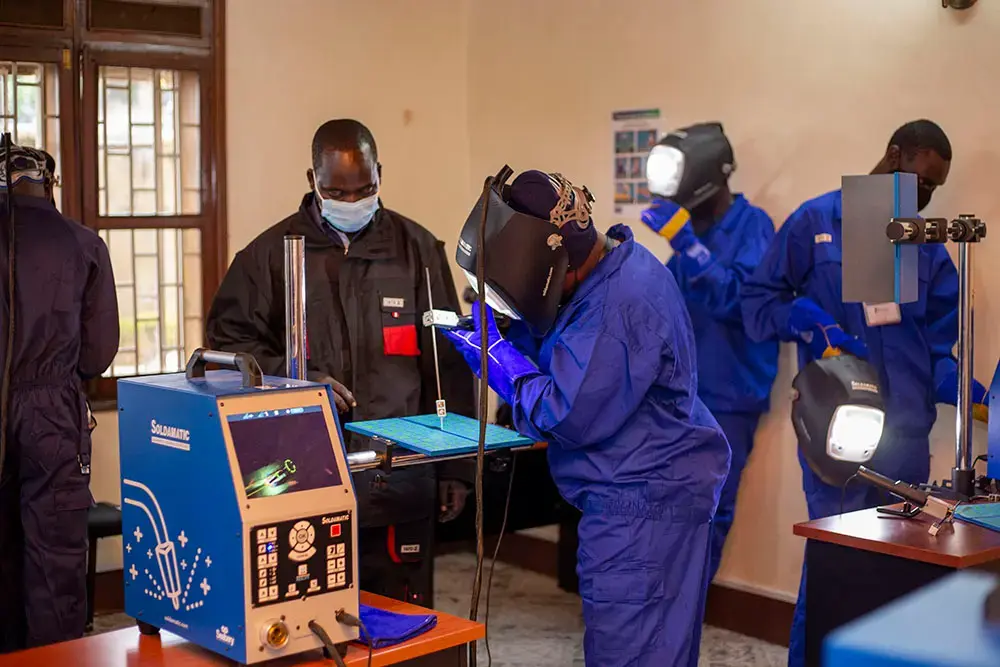
Suggested subject: Welders wearing appropriate protective equipment.
Caption: Welding and metal fabrication require measurement, drawing interpretation, machine control, safety and precision.
Alternative text: Skilled welders joining metal components inside a fabrication workshop.
Photo after the education pathways
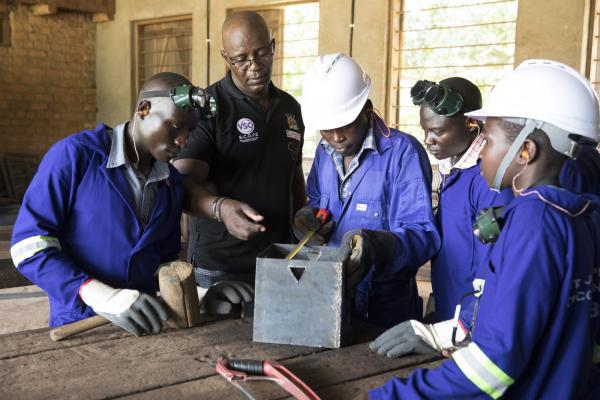
Suggested subject: TVET learners examining an engine or industrial machine.
Caption: Practical training allows learners to develop workplace competence using real tools, machines and technical procedures.
Alternative text: Technical students receiving practical instruction on the parts of an engine.
Photo after quality assurance
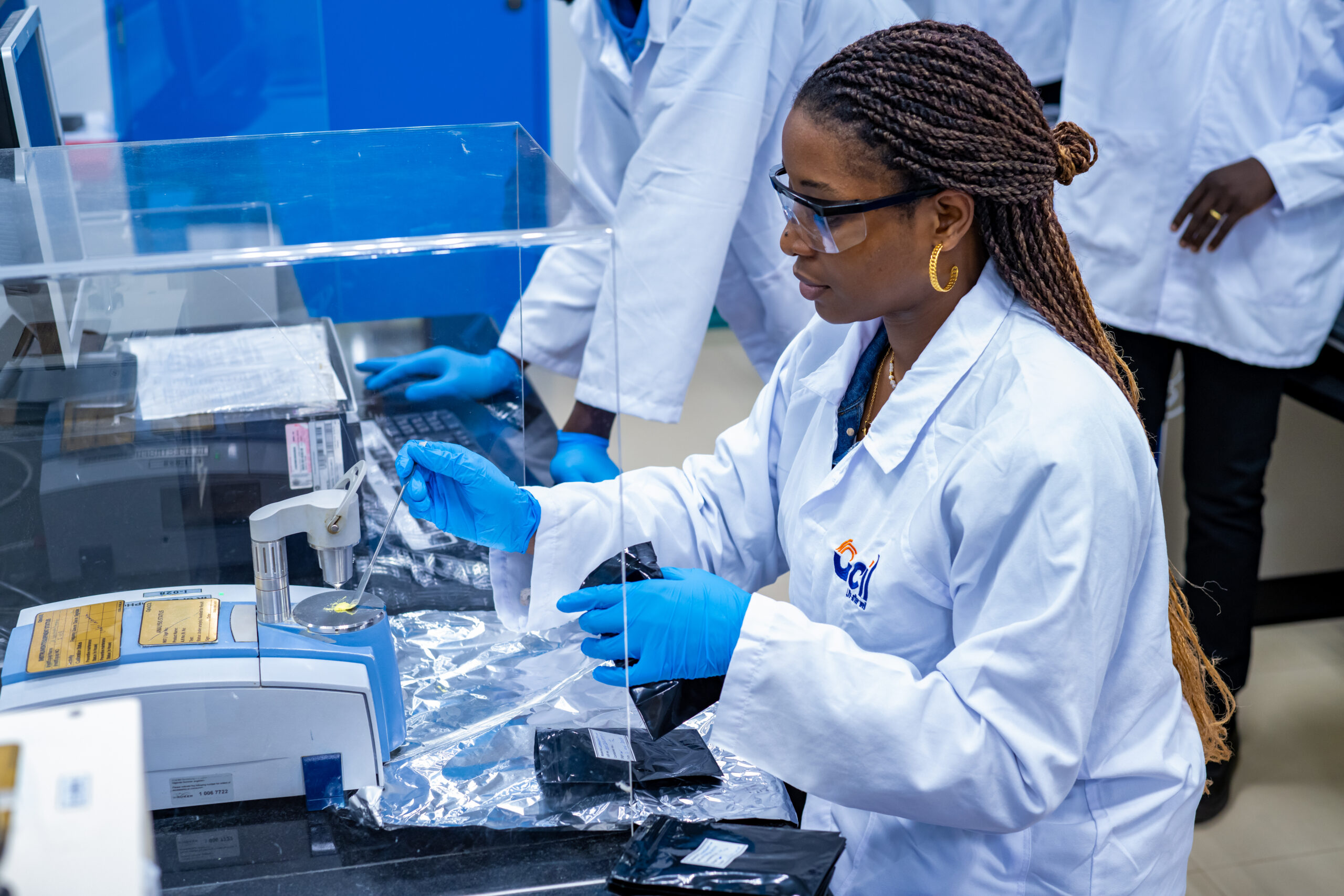
Suggested subject: A technician working in a product-testing laboratory.
Caption: Laboratory testing helps manufacturers confirm that materials and finished products meet safety and quality requirements.
Alternative text: Laboratory technician operating modern product-testing equipment.
Recommended Videos and Placement
Open each cited video and paste its address into a WordPress YouTube block or video widget. Preview the complete video before publishing to confirm that it remains available and appropriate for learners.
1. Food processing and value addition
Video: Food Processing and Value Addition R&D at Uganda Industrial Research Institute
Best placement: Immediately after the section explaining how raw materials become finished products.
This video can help learners see the connection between agriculture, processing technology, product development and industrial research. (YouTube)
2. Understanding the role of industrial research
Video: Uganda Industrial Research Institute: A Lead Agency of Industrialisation
Best placement: After the section explaining why manufacturing matters.
It introduces the role of research, training, technology development and value addition in industrial growth. (YouTube)
3. Quality standards and business
Video: How UNBS Is Facilitating Business: Enterprises in Kampala Speak Out
Best placement: After the quality-assurance pathway.
It can introduce learners and entrepreneurs to the relationship between standards, product safety, certification and business competitiveness. (YouTube)
4. Technical and vocational skills
Video: Using Technical and Vocational Education and Training Skills for Development
Best placement: After the TVET education route.
It supports discussion about practical training, employability and skills development. (YouTube)
5. Engineering and industrialisation
Video: Innovative Engineering for Industrialisation and Economic Growth
Best placement: Near the section on the future of manufacturing.
It is especially suitable for older learners, teachers and career-guidance sessions examining the role of engineering in economic development. (YouTube)
Publishing details from the supplied brief
# Occupational Category 13: Manufacturing

## Turning Raw Materials, Ideas and Technology into Useful Products

**Target audience:** Learners, teachers and parents
**Suggested blog category:** Career Guidance / Science and Technology / TVET
**Suggested page title:** Manufacturing Careers in Uganda: Courses, Subjects, Skills and Opportunities
**Suggested URL slug:** `manufacturing-careers-uganda`
**Meta description:** Discover manufacturing careers, pathways, school subjects, courses, practical skills and employment opportunities available to learners interested in engineering, production, food processing, logistics, quality control and industrial technology.

---
Original “Beyond the Factory Floor” draft supplied to KAWA
Beyond the Factory Floor: 5 Surprising Truths About Uganda’s Manufacturing Boom
In my experience advising both multinational investors and high-potential professionals, the most overlooked asset in the East African market is the sheer velocity of Uganda’s industrial evolution. For too long, the prevailing perception of manufacturing has been one of dusty, static workshops or slow-moving assembly lines.
The reality on the ground tells a much more sophisticated story. Far from being a stagnant industry, Uganda’s manufacturing sector has emerged as a dynamic powerhouse, repositioning itself as a primary driver of national development. This sudden momentum is the result of a strategic alignment of regional trade positioning, diverse product outputs, and a modernized labor force. For those seeking a future-proof career or a high-yield investment, the "factory floor" is no longer just about manual labor—it is the center of a high-stakes economic revolution.

A Sector Moving at Breakneck Speed
The most striking evidence of this shift is found in the data, which highlights a sector outfacing traditional industries through a consistent and aggressive upward trajectory. To understand the scale of this opportunity, consider three key metrics:

Consistent Expansion: Manufacturing output has expanded by more than 10% annually over the last five years.
National Impact: This double-digit growth represents a fundamental shift in the national economy, moving from raw material exports to value-added production.
Talent Absorption: This "breakneck speed" creates an immediate and constant demand for new talent to manage the increasing complexity of industrial output.
Uganda's Manufacturing Sector is one of the fastest growing sectors in the country with manufacturing output expanding by more than 10% annually over the last five years.
For a strategist, this growth rate signifies more than just volume; it indicates a stable foundation for economic resilience and rapid job creation.

Not Just a Local Player (The COMESA Advantage)
A common misconception among outsiders is that Ugandan manufacturing exists solely to serve the domestic market. In reality, the sector is engineered for regional dominance. Uganda’s membership in the Common Market of Eastern and Southern African Countries (COMESA) provides a massive gateway to a market of hundreds of millions.
To bolster this regional ambition, the government provides a dual-layer incentive structure. This includes fiscal incentives (tax benefits and duty exemptions) and physical incentives, such as the development of specialized Industrial Parks and Free Zones that provide the infrastructure necessary for high-volume exports.
For the modern professional, this changes the "scale" of a manufacturing career. You are no longer managing a local supply chain; you are operating within a complex, multi-national trade network. From a consultant’s perspective, this regional integration significantly de-risks the market for investors, as businesses are not tethered to the fluctuations of a single domestic economy.

High-Tech and Healing (The Diverse Product Range)
The modern manufacturing landscape in Uganda has moved far beyond basic textiles. The current sector is characterized by an impressively diverse product range that creates a vital "safety net" for the economy. Opportunities now exist in high-value, specialized fields including:

Medical and Pharmaceuticals: The production of hi-tech medical products and life-saving medicines.
Electronics and Technology: Assembly of electronic goods and sophisticated hi-tech components.
Infrastructure Materials: Ceramics, glass, PVC, fabrication, and fertilizers.
Consumer Processing: Beverages, leather, and tobacco-based products.
This diversity means that a professional’s career stability is not tied to the boom-and-bust cycle of a single commodity like coffee or oil. If one niche faces a downturn, the industrial base is broad enough to sustain the wider professional ecosystem, offering specialists a variety of resilient career paths.

The Invisible Architects (Logistics and Process Development)
While the physical act of "making" is the visible heart of the industry, the sector’s success relies on "invisible" architects—the specialists who master logic and flow. Manufacturing is as much about sophisticated planning as it is about assembly.
The industry is divided into critical pathways like Manufacturing Production Process Development and Logistics and Inventory Control. These roles bridge the gap between "low-tech" manual tasks and "high-tech" oversight. Even fundamental tasks like wrapping pallets for shipment or unloading trucks are now integrated into complex digital communication chains involving Traffic Managers and Logistical Managers.
This involves planning, managing, and performing the processing of materials into intermediate or final products and related professional and technical support activities such as production planning and control, maintenance, and manufacturing/process engineering.
Key roles like Industrial Engineers and Design Engineers serve as the tactical brains of the operation, ensuring that every movement on the factory floor is optimized for maximum efficiency.

From Pipes to Pastries (The Unconventional Career Map)
Perhaps the most surprising truth about this boom is the sheer variety of disciplines it absorbs. "Manufacturing" is an umbrella term for an array of seemingly unrelated skills. While traditional engineering—Electrical, Mechanical, and Civil—remains the backbone, the career map extends into specialized areas like Wood Science & Technology and even Pastry & Bakery.
The educational requirements reflect this breadth. Beyond the standard sciences, subjects like Fine Art have become surprisingly relevant. In a competitive regional market, Fine Art is the foundation for industrial design, packaging aesthetics, and product ergonomics. Whether your background is in Computer Science, Metal Work, or Home Management, there is a specialized niche for you in this industrial evolution. It is a sector where a chemist, a lab technician, and a creative designer all collaborate on the same production line.

Conclusion: The Future of the Ugandan Maker
As Uganda continues to leverage its abundant natural resources and a motivated labor force, the manufacturing sector stands as the definitive frontier of the nation's future. The transition from a local producer to a regional industrial hub is no longer a goal—it is a current reality supported by a 10% annual growth rate and a sophisticated infrastructure of logistics and engineering.
The evolution of the "Ugandan Maker" is no longer confined to manual labor; it is happening in design labs, regional trade boardrooms, and high-tech assembly plants.
As this sector continues its aggressive climb, how will you position your skills to lead the next generation of industrial pioneers?
Manufacturing Careers in Uganda: Turning Raw Materials, Ideas, and Technology into Useful Products

Introduction: Manufacturing Is All Around Us
Almost every product used at home, school, or work has passed through some form of manufacturing. The exercise book used by a learner may have started as timber, recycled paper, or imported paper rolls. The school uniform began as cotton, thread, or fabric. A packet of maize flour began with grain supplied by farmers. A plastic water pipe began as raw plastic material that was heated, shaped, cooled, tested, and packaged. A metal classroom desk required design, measurement, cutting, welding, painting, inspection, and delivery.
Manufacturing is far broader than simply "working in a factory." It brings together science, engineering, creativity, business, technology, safety, environmental protection, logistics, and practical craftsmanship.
Imagine a dairy-processing company receiving fresh milk early in the morning. Before that milk becomes yoghurt, more than ten specialized professionals contribute:
- Procurement Officer: Coordinates raw milk intake with local dairy farmers.
- Laboratory Technician: Tests incoming milk for purity, fat content, and safety.
- Refrigeration Technician: Maintains cold-chain chilling systems.
- Machine Operator: Runs the automated pasteurization and packaging line.
- Food Scientist: Formulates culture blend, flavor, and texture.
- Electrical Technician: Maintains the electric motors and PLC control panels.
- Quality-Control Officer: Checks hygiene, acidity (pH), seal strength, and taste.
- Production Planner: Calculates batch sizes and schedules daily runs.
- Storekeeper: Tracks containers, labels, cultures, and ingredients.
- Safety Officer: Ensures safe chemical handling and machine guards.
- Logistics Team: Manages insulated dispatch to retail stores.
What Is Manufacturing?
Manufacturing is the organized process of converting raw materials, ingredients, or components into intermediate or finished products through craftsmanship, machinery, chemical/biological transformations, and digital automation systems.
Unprocessed starting inputs: milk, cotton, timber, steel, clay, maize, animal hides, fruits, chemicals, and plastic resin.
Semi-processed goods used in further production: flour, fabric, sheet metal, leather, timber boards, and packaging film.
Ready for final consumption: bread, school uniforms, furniture, medicines, roofing sheets, soap, shoes, cables, and juice.
Why Manufacturing Matters
Manufacturing adds value to raw resources. Instead of selling raw maize alone, value addition converts it into fortified flour, animal feed, breakfast cereals, or industrial starch. Cotton becomes yarn, fabric, school uniforms, and medical gauze.
Uganda’s Fourth National Development Plan (NDP IV 2025/26–2029/30) positions sustainable industrialization at the core of expanding value addition and raising household incomes. The accompanying Human Resource Development Plan outlines the need to generate approximately 4.4 million jobs across the economy, with agro-industrialization contributing about 60% of manufacturing output.
Interactive Career Matcher: Find Your Place in Manufacturing
Select what you enjoy doing most to discover your manufacturing match:
6 Core Manufacturing Career Pathways
Pathway 1: Health, Safety and Environmental (HSE) Assurance
Ensures that production runs without injuries, occupational diseases, fires, hazardous spills, or environmental pollution. Governed by the Occupational Safety and Health Act under the Ministry of Gender, Labour and Social Development and inspected by NEMA.
Key Roles: Safety Coordinator, Occupational Hygienist, Environmental Compliance Officer, Chemical Safety Assistant, Fire Safety Specialist.Pathway 2: Logistics and Inventory Control
Manages the movement and storage of raw inputs, packaging, machinery spares, and finished stock to ensure uninterrupted production and on-time customer delivery.
Key Inventory Principles:- FIFO (First In, First Out): Used for dry stores and non-perishables.
- FEFO (First Expiry, First Out): Critical for food, pharmaceutical, and chemical manufacturing to eliminate spoilage.
Pathway 3: Maintenance, Installation and Repair
Installs, calibrates, services, and troubleshoots machinery to prevent costly plant downtime.
- Preventive Maintenance: Scheduled servicing, lubrication, and parts replacement.
- Predictive Maintenance: Sensor monitoring and vibration analysis to catch failures before they occur.
- Corrective Maintenance: Rapid diagnosis and systematic repair after breakdowns.
Pathway 4: Product and Manufacturing-Process Development
The "tactical brains" who design product prototypes, factory layouts, production workflows, and energy-efficient automation systems.
Key Roles: Industrial Engineer, CAD Technician, Tool & Fixture Designer, Chemical Process Engineer, R&D Technologist.Pathway 5: Production & Operations
The core workforce operating automated equipment, cutting materials, formulating blends, joining components, and packing finished items.
Key Roles: Machine Operator, Certified Welder, CNC Machinist, Garment Technician, Commercial Baker, Production Line Supervisor.
Pathway 6: Quality Assurance (QA) and Quality Control (QC)
Ensures products comply with national and regional standards (such as the UNBS Quality Certification Mark).
- Quality Assurance (QA): Systems-level defect prevention, process validation, hygiene protocols, and documentation.
- Quality Control (QC): Physical, chemical, and microbiological testing of batches during and after production.

Educational Pathways & Training Routes
Route 1: Practical TVET & DIT Certification
Competency-based training under the Directorate of Industrial Training (DIT) and UBTEB. Leads to recognized occupational qualifications in welding, electrical installation, machining, plumbing, and garment construction.
Route 2: National Diploma Level
Prepares supervisors, laboratory technologists, and maintenance technicians in mechanical, electrical, automotive, and civil/building engineering.
Route 3: University Degree Programmes
Professional engineering and science degrees (e.g., Mechanical & Manufacturing Engineering at Kyambogo, Food Science & Technology at Makerere, Agricultural Mechanization at Busitema).
Route 4: Incubation & Short Courses
Hands-on enterprise incubation and product testing through institutions like the Uganda Industrial Research Institute (UIRI).
Subject Combinations: Building Your Foundation
- Mechanical, Electrical & Automation: Physics and Mathematics (e.g., PCM, PEM).
- Food Science, Biotechnology & Chemicals: Biology, Chemistry, and Agriculture or Foods & Nutrition.
- Agricultural Mechanization: Mathematics and Physics paired with Agriculture or Chemistry.
- Logistics, Procurement & Operations: Mathematics, Economics, Geography, ICT, and Entrepreneurship.
- Product Design & Garment Technology: Art and Design, Clothing & Textile, Chemistry, and ICT.
Interactive Workshop Tool: The 5S Quality System
Click on each standard to learn how modern factories organize productive, safe workplaces:
Common Misunderstandings About Manufacturing
Fact: Modern manufacturing relies heavily on CAD design, process planning, microbiology testing, software controls, and automated operations.
Fact: Food processors need biologists and chemists; garment lines need designers; plants need accountants, storekeepers, and safety managers.
Fact: Automated lines increase demand for skilled technicians, PLC programmers, quality auditors, and reliability maintenance engineers.
Guidance for Learners, Parents & Teachers
For Parents: Value practical and technical problem-solving as genuine intelligence. TVET certificates and diplomas provide viable, high-demand career pathways with strong progression into engineering and business ownership.
For Teachers: Connect classroom science and math to physical products. Calculate percentages of scrap in Math, demonstrate fermentation in Biology, and conduct a 5S audit in your school science laboratory.


The sector is indeed important for job provision and economic development
ReplyDeleteHi,Lots of useful information. Thanks for sharing.
ReplyDelete