From Soil to Supermarket: How Tomato Heroes in Northern Uganda Are Feeding a Nation — Your Complete Guide to Careers in Crops, Soils & Farm Management

KAWA Uganda · Career Guidance · Research Post
From Soil to Supermarket: Careers in Crops, Soils & Farm Management
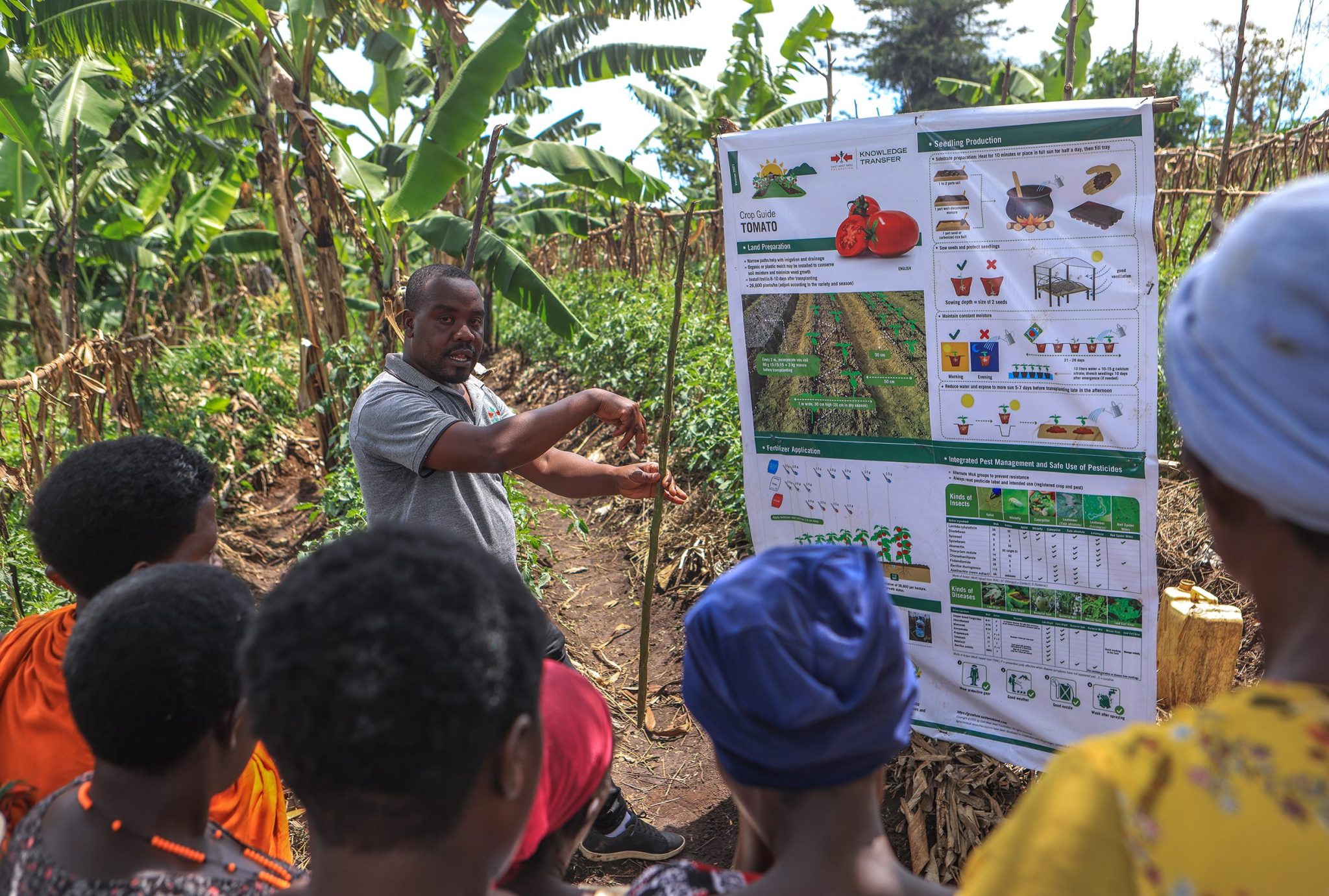
Meet the tomato heroes of northern Uganda. Agricultural extension officers and crop specialists working in a demonstration field in Gulu — showing farmers how to grow more, earn more, and feed a nation. This is science, business and service in one career.
Start With The Tomato Story ↓ Try Profit Calculator 🍅
1. What Is Crops, Soils & Farm Management?
Crops = what we grow. Soils = where it grows. Farm Management = how we plan, budget, manage people and sell it profitably. Together they are the backbone of Uganda’s food system.
Agriculture is not just digging. A modern farm is a laboratory, a business and a classroom. The extension officer tests the soil, the crop specialist chooses the seed and spray programme, the soil scientist fixes fertility, and the farm manager makes sure labour, water, transport and money all work together.
of Ugandans depend on agriculture for livelihoods. It is Uganda’s biggest employer.
of GDP comes from agriculture — and about 42% of export earnings in 2023/24.
vegetable training sites were set up in Lira and Gulu by East-West Seed to teach good horticulture.
profit is possible from half an acre of well-managed tomatoes — if you get seed, soil, water and market right.

 🍅 CASE STUDY — NORTHERN UGANDA
2. The Tomato Demonstration Field in Northern Uganda — A Real Research Story
Where? Gulu City, Omoro, Lira, Kole, Alebtong and Kwania — the Lango and Acholi sub-regions. Who? East-West Seed Knowledge Transfer (EWS-KT), Terraregen Solution in Gulu/Omoro, district production officers, schools, cooperatives and lead farmers. What? Demonstration plots where farmers see — not just hear — how to grow tomatoes.
What happens on a demo day?
- Soil first: The officer tests pH, shows farmers the soil colour, texture and drainage. No guessing.
- Seed & nursery: Hybrid tomato seed, raised beds, shade, clean water. Seedling raising and transplanting is one of the 4 priority topics taught in Lira and Gulu.
- Spacing & staking: Rows, stakes, string trellising. Plants stand up, get air and sun, and disease drops.
- Feeding: Manure + correct fertiliser at the right time. Fertilisation is the second priority topic.
- Protecting: Scouting for pests — Tuta absoluta, blight, bacterial wilt — and Integrated Pest Management, not just spraying.
- Water & mulch: Drip irrigation, mulch to keep moisture, especially in dry season. In Gulu City, Terraregen runs hybrid tomatoes with drip and mulch.
- Harvest & market: Picking at the right stage, grading, packing, and linking to buyers in Gulu town, Lira town and Kampala.
Why does it work? Research with 797 tomato farmers in Eastern Uganda found that when extension explains why a fertiliser works — not just what to do — farmers understand and adapt it better. Good extension officers are teachers of science, not just messengers.

What farmers in Lira and Gulu told researchers
In Akolodong, Lira, farmers like David Ayo started picking tomatoes from a demonstration garden and became lead farmers. In Gulu, Knowledge Transfer Officer Solome Abalo has trained farmers for over 5 years — her own farm in Awach Sub-County is itself a classroom. In Lira, a women’s group opened a horticulture enterprise on half an acre and built a hub selling certified climate-smart seeds.
Lesson for career guidance: The demo field is where a career is born. A learner who visits a demo, asks questions, and volunteers to record data is already doing the work of an extension officer.
3. The 4 Careers Inside Crops, Soils & Farm Management
Tap each job to see the full picture. All four work together on the same tomato field — but each has a different superpower.
👩🏾🌾 1. Agricultural Extension Officer — The Teacher of Farmers
FIELD + PEOPLEGOVERNMENT / NGO / PRIVATE
What they do: Visit farms, run demonstration plots, organise Farmer Field Schools and Field Days, train farmers on seed, spacing, fertiliser, pest control and marketing. They are the bridge between research and the farmer.
A day in Gulu: 7am — check demo plot, scout for blight. 9am — train 25 farmers on transplanting. 12pm — soil sample with a lead farmer. 2pm — record yields on a phone app. 4pm — call an agro-dealer about seed delivery.
Skills: Communication in local language + English, patience, practical farming, record-keeping, motorbike riding, phone / data skills.
Training: Certificate / Diploma in Agriculture, Agribusiness or Agricultural Extension, or Degree in Agriculture, Agricultural Extension, Agribusiness or Agro-Forestry. Many jobs ask for 2–5 years field experience. A postgraduate qualification is an added advantage for senior roles.
Employers: Ministry of Agriculture (MAAIF), District Production Departments, NGOs like DRC, AVSI, Send a Cow, private seed companies like East-West Seed, Simlaw, cooperatives, and agribusinesses like Omia, Nile Breweries.
🔬 2. Crop Specialist / Agronomist — The Plant Doctor & Yield Expert
SCIENCE + FIELD TRIALSSEED COMPANIES / RESEARCH
What they do: Provide expertise on optimal planting, crop nutrition, irrigation, pest and disease management and overall crop health. Design trials — e.g. compare 3 tomato varieties on the same soil — measure yield, and advise which variety wins.
A day on trial: Measure plant height, count fruits, check leaf colour, test a new fertiliser, write a report that a seed company or NARO will use to decide what to sell next season.
Skills: Crop science, statistics, observation, report writing, soil + pest knowledge.
Training: Diploma in Agriculture / Crop Science, or Bachelor’s in Agronomy / Crop Science. For research roles: BSc Agriculture specialising in soil, plant or crop science. Experience in field extension or agronomy advisory is highly valued.
Employers: Seed companies (East-West Seed, Simlaw, Ujaama Seed), sugar / agro-processors (Kinyara Sugar), research (NARO, IITA, Louis Dreyfus), NGOs, large farms.
🧪 3. Soil Scientist / Soil Health Specialist — The Underground Detective
LAB + FIELD【entity-FAO¦canonical_name=FAO】 / PEDON / MAKERERE
What they do: Test soil pH, N-P-K, organic matter and moisture. Recommend lime for acidic soil, manure / compost for poor soil, and correct fertiliser rates. Lead soil health and land-use programmes. Without them, farmers waste money on the wrong fertiliser.
A day: Take composite samples (15–20cm deep, from 5 spots), label, test with kit or send to lab, interpret results, explain to a farmer: “Your soil is pH 5.2 — acidic. Add lime, add manure, then your tomato will take up fertiliser.”
Skills: Chemistry, patience, data, teaching farmers in simple language.
Training: Advanced degree in Soil Science, Agronomy, Land Use Management or Agricultural Engineering (Soil & Water) for senior roles. For entry: BSc Agriculture / Soil Science. 【entity-FAO¦canonical_name=FAO】 Uganda asks for 5+ years in soil management for specialists. Makerere offers MSc Soil Science (3 years).
Employers: 【entity-FAO Uganda¦canonical_name=FAO】, Pedon Uganda, NARO, Makerere, private soil-testing labs, NGOs, district soil programmes.
📊 4. Farm Manager — The CEO of the Farm
BUSINESS + LEADERSHIPLARGE FARMS / AGRIBUSINESS
What they do: Plan the season, budget, hire and supervise labour, order inputs, manage irrigation and machinery, keep records, negotiate with buyers, and make sure the farm makes profit. On a 1,000-hectare farm in Luwero, a manager oversees everything.
A day: 6am — walk the field with the agronomist. 8am — assign labour. 10am — check irrigation and fuel. 1pm — update costs in a book / app. 3pm — meet a buyer for 200 boxes of tomatoes. 5pm — plan tomorrow’s harvest.
Skills: Budgeting, leadership, negotiation, record-keeping, basic accounting, problem-solving.
Training: Degree / Diploma in Agriculture, Agribusiness, Farm Management, Agricultural Economics. Experience 3–5+ years. Many managers start as extension officers or agronomists and grow into management.
Pay guide (research, not a promise): Agricultural / Farm Managers in Uganda are reported around UGX 3–4 million per month on average, with entry lower and senior specialists higher. Pay varies by employer, location, farm size and experience. Always check the actual job advert.
| Career | Best Subjects in S.5/S.6 | First Qualification | Where to Start |
|---|---|---|---|
| Extension Officer | Biology, Agriculture, Geography, Entrepreneurship | Certificate / Diploma in Agriculture | District, NGO, Seed Company |
| Crop Specialist / Agronomist | Biology, Chemistry, Agriculture, Math | Diploma / BSc Agronomy / Crop Science | Seed Company, NARO, Large Farm |
| Soil Scientist | Chemistry, Biology, Geography, Math | BSc Agriculture / Soil Science → MSc Soil Science | FAO, Lab, Makerere, NARO |
| Farm Manager | Biology, Agriculture, Economics, Entrepreneurship | Diploma / BSc Agribusiness / Farm Management | Large Farm, Cooperative, Agribusiness |
 🧪 SOILS — TEST BEFORE YOU PLANT
4. Soils: The Science Under Your Feet
Tomato likes soil pH 5.5–7.5, rich in organic matter, well-drained, not waterlogged. If pH is too low (acidic), the plant cannot take up nutrients even if you add fertiliser. That is why extension officers say: Test first, fertilise second.


Try it: Soil pH Checker for Schools
Select a pH value your class measured. See what it means for tomatoes.
School method: Collect 1 cup soil from 5 spots, mix, add ½ cup vinegar — fizz = alkaline. Add ½ cup baking soda + water — fizz = acidic. For accurate results, send a composite sample to a lab (Makerere Soil Lab, NARO, or a private lab).
5. Tomato From Seed to Market — The Full Cycle
| Stage | What Happens | Who Leads It? |
|---|---|---|
| 1. Nursery (0–4 weeks) | Seed in raised beds, shade, watering, hardening. Healthy seedlings = healthy crop. | Extension + Crop Specialist |
| 2. Land Prep & Transplanting | Plough, add manure, make beds, transplant in evening, water immediately. | Farm Manager + Extension |
| 3. Staking & Mulching | Stakes + string, mulch with dry grass to keep moisture and stop weeds. | Farm Workers + Officer |
| 4. Feeding & Protection | Fertiliser at correct stages, scouting, IPM, drip irrigation in dry season. | Agronomist + Soil Scientist |
| 5. Harvest & Grading | Pick at breaker stage, grade by size / colour, pack in crates, avoid bruising. | Farm Manager |
| 6. Marketing | Sell to local market, schools, hotels, traders, or processing. Record profit. | Farm Manager + Cooperative |
🍅 Tomato Profit Calculator — Try It!
Enter your plan. This is a learning tool — real profit depends on seed, weather, pests and market price.
6. Watch & Learn — Photos & Videos From Real Fields
Watch these before your next school garden lesson. They show exactly what extension officers teach in the field.
Why staking keeps plants healthy and fruits clean.
Removing lower branches for air, light and less disease.
Water, mulch and timing — lessons from Ugandan farmers.
Take 5 samples, test, compare — the first step before fertiliser.
🎥 Real Ugandan Farmer Reels — Tap To Watch

Videos are from YouTube, Instagram and Facebook creators. KAWA shares them for learning. Always check the creator’s page for the latest version.
7. For Learners, Schools, Teachers & The General Public
🎓 For Learners — Your Pathway
- In S.3–S.4: Take Biology, Chemistry, Agriculture, Geography seriously. Start a 2m x 2m tomato plot at home. Record everything in a book.
- In S.5–S.6: Choose BCA (Biology, Chemistry, Agriculture) or BCG / BCM. Volunteer at a demo field in holidays. Ask an extension officer to mentor you.
- After S.6: Certificate in Agriculture → Diploma in Crop Production / Agribusiness → Degree in Agriculture / Agronomy / Soil Science → MSc if you want research.
- No degree? No problem: Many extension officers start with a Certificate / Diploma + 2 years field experience. Skills + field record matter more than paper alone.
✨ Quick Career Quiz — Which Job Fits You?
Tap what you love most:
🏫 For Schools — Set Up a 10m x 10m Tomato Demo Plot in 7 Steps
- Choose a sunny, well-drained spot near water. Test soil pH with the class.
- Divide class into 4 teams: Soil, Nursery, Crop Care, Records & Marketing.
- Raise nursery (3–4 weeks). Transplant 60–80 seedlings at 60cm x 60cm.
- Stake + mulch. Water morning / evening in dry season.
- Scout every Monday: count pests, check leaves, record in a chart.
- Harvest, weigh, grade. Calculate profit with the calculator above.
- Invite an extension officer for a Field Day — let learners present.
👩🏾🏫 For Teachers — 5 Ready Lesson Ideas
- Biology: Tomato lifecycle + photosynthesis in the demo plot.
- Chemistry: Soil pH test + N-P-K fertiliser experiment.
- Geography: Why northern Uganda (Gulu/Lira) grows vegetables — climate, soil, market.
- Math: Spacing, yield per acre, profit calculation.
- English / Entrepreneurship: Write a farm business plan and pitch it to a “buyer” (another class).
👨👩👧 For Parents & General Public — How To Support / Enter
- Parents: Visit a demo field with your child. Ask the officer: “What subjects? What cost? What jobs after?” Don’t push a course your child hates — let them try the field first.
- School leavers: Start as a farm assistant / demo volunteer. Get a Certificate in Agriculture. Build a portfolio: photos of plots you managed, yields, records.
- Working adults: Short courses in soil testing, drip irrigation, agribusiness. Many NGOs run free / low-cost training in Gulu, Lira, Soroti and Kampala.
- Entrepreneurs: Agro-input shop, soil-testing service, seedling nursery, tomato aggregation / transport, solar irrigation — all are careers around the farm, not just on it.
8. Where To Train in Uganda — KAWA Links
Confirm current programmes, fees and intake directly with the institution before applying. Some KAWA profiles were published in 2016.
Top Agriculture Universities in the KAWA Directory
- Makerere University — BSc Agriculture, MSc Soil Science
- Gulu University — Bachelor of Agriculture
- Busitema University — BSc Agriculture, Agricultural Mechanisation
- Mbarara University of Science and Technology
- Kyambogo University
- Uganda Martyrs University
Start With These KAWA Career Guidance Pages
- Agriculture, Food & Natural Resources — Career Field
- The 16 Careers Clusters
- Training Institutions in Uganda
- Scholarships
- Admission Requirements & Choice of School
- KAWA Career Guidance Handbook
📚 See Full KAWA Directory — All Handbook, Fields, Training & Universities (72 Links)
Handbook: Introduction · Executive Summary · Chapter 1 · Chapter 2 · Chapter 3 · Chapter 5 · Career Pathways
Career Fields: Health · ICT · STEM · Business · Hospitality · Education · Law · Finance · Architecture · Arts · Manufacturing · Marketing · Government · Human Services
Training & Funding: Recognized Institutions · List of Universities · Private Colleges · Minister’s Message · Commissioner’s Message · President’s Message
Universities: African Bible · African Renewal · African Rural · Aga Khan · All Saints Lango · Bishop Barham · Bishop Stuart · Bugema · Busoga · Cavendish · IHSU · IUEA · Islamic Call · IUIU · Kabale · KIU · Kampala University · Kumi · Livingstone · Mountains of Moon · Muteesa I · Ndejje · Nkumba · Nsaka · St Augustine · St Lawrence · UCU · UMU Nile Campus · Pentecostal · UTAMU · University of Kisubi · Victoria · Virtual University · Featured: Lab to Life-Saving · Live Blog Archive
9. Questions Learners Always Ask
Do I need to be from a farming family to succeed?
No. Most extension officers and agronomists learned farming at school, at a demo plot, or on a first job. What matters is curiosity, hard work and willingness to be in the field.
Is agriculture only for people who fail other courses?
No — it is science + business. Soil scientists use chemistry, agronomists use statistics, farm managers use accounting. Uganda’s best farms are run by graduates.
Can girls / women succeed in this field?
Yes. Women lead demo fields, run seed hubs, manage farms and lead extension teams in Gulu and Lira. KAWA encourages girls to take BCA and join school demo plots.
What if I have no money for university?
Start with Certificate / Diploma, volunteer, apply for scholarships on the KAWA Scholarships page, and look for NGO / district training. A strong field record often opens doors.
Sources & Further Reading (Research)
- East-West Seed Knowledge Transfer — Vegetable training in Gulu & Lira, 600 training sites, finance for smallholder farmers: ews-kt.com
- Terraregen Solution — Gulu City intensive model, hybrid tomatoes with drip & mulch: terraregensolution.com
- FAO Uganda — Agriculture employs 70%+, contributes ~24% GDP: fao.org/uganda
- Bank of Uganda / Monitor — Agriculture is Uganda’s best economic bet: monitor.co.ug
- Makerere University — MSc Soil Science, BSc Agriculture: caes.mak.ac.ug
- Busitema University — BSc Agriculture, Crop Production: busitema.ac.ug
- KAWA Career Guidance Handbook & Directory: KAWA Handbook
Research note: Salary and profit figures are guides from job adverts and farmer reports, not guarantees. Always confirm with the employer / institution. Photos are for illustration from public sources — extension work, tomato fields and soil testing in Uganda / East Africa.
Your Turn: Visit a Demo Field This Week.
Ask your teacher to invite an extension officer. Take one photo, write one lesson, share it with one friend. That is how a career starts.


Comments
Post a Comment