
Education, Skills & the Future of Work
Preparing young people not simply to hold certificates, but to think, create, produce, innovate, work and build sustainable livelihoods in a rapidly changing world.

President of the Republic of Uganda
Education must increasingly connect learning with productive life
The education challenge today is no longer simply how many young people enter school. It is also whether learners leave education with useful knowledge, practical competence, values, confidence and the ability to participate meaningfully in society and the economy.
The expansion of education through Universal Primary Education, Universal Secondary Education, universities, vocational institutions and other training opportunities has enabled millions of young people to learn. The next challenge is to strengthen quality, relevance, completion, practical competence and the transition from learning into productive work.
The labour market is also changing. Digital technologies, Artificial Intelligence, automation, modern agriculture, manufacturing, the service economy and global communication are transforming the skills required from young people.
Education should empower a learner to understand the world, solve problems, apply knowledge, create value and confidently participate in the economy — whether through employment, enterprise, innovation or self-employment.
Six priorities for education, employment and transformation
Relevant Education
Learning should develop literacy, numeracy, knowledge, discipline, creativity, communication and the ability to apply what has been learnt to real situations.
Science, Technology & AI
Young people should understand science and use digital technology and Artificial Intelligence responsibly to research, design, communicate and solve problems.
Technical & Vocational Skills
TVET, apprenticeship and practical training must provide real competence that can be used in workshops, farms, businesses, industries and emerging professions.
Entrepreneurship
Career guidance should prepare learners for both employment and self-employment, enabling them to identify opportunities, calculate risk and build sustainable enterprises.
Production & Value Addition
Education should help learners understand how knowledge can improve agriculture, manufacturing, services, processing, productivity and the quality of locally produced goods.
Lifelong Learning
Because technology and occupations keep changing, learning cannot end at graduation. Young people need the ability to retrain, learn online and continuously acquire new skills.
The national conversation has moved further toward skills, technology and employability
Recent presidential messages have continued to place emphasis on accessible education, practical skills, science and technology, innovation and the ability of young people to create productive livelihoods.

A stronger pathway for every young person
Building skills that translate into productive ability


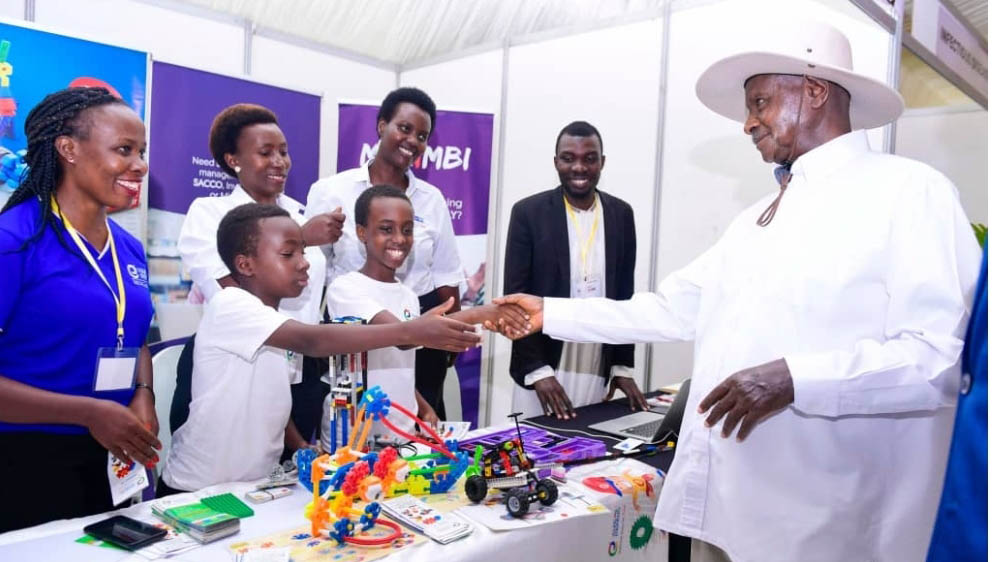
Recent messages on education, technology and skilling

International Day of Education 2025
President Museveni discusses education, science, technology and Artificial Intelligence.

Expanding practical skilling opportunities
Remarks on industrial skilling hubs, employable skills and preparation for self-employment and job creation.

Skills linked to productive livelihoods
A message connecting practical skilling with production, enterprise and income generation.

Archive • Education
Original education message
The video that appeared in the original version of this blog page has been retained.
The goal is an educated, skilled, innovative and productive generation
Education succeeds when young people can transform knowledge into competence, competence into productivity and productivity into better livelihoods for themselves, their families and their communities. The task ahead is therefore to ensure that access to education is matched by quality, practical skills, technology, innovation, career awareness and pathways into productive economic activity.


This is a good message from our president. He should go ahead to ensure that what is said is put in practice. The headteachers in most government secondary schools are the most unpatriotic, unfocused and do not understand the national goals for development. Their actions should be in line with vision 2040 but what i see on ground is totally different.
ReplyDeleteGreat post i must say and thanks for the information. Education is definitely a sticky subject. However, is still among the leading topics of our time. I appreciate your post and look forward to more. kampala international university
ReplyDelete