Chapter Five: Skills Training
TVET: Build a Skill You Can Prove, Use and Grow
Learn how Uganda’s current Technical and Vocational Education and Training system works, how to choose a recognised course, how qualifications progress, and how practical skills can lead to employment, enterprise and further study.

TVET at a Glance
TVET is not a second-class version of education. It is a pathway designed around occupational competence. The strongest course is the one that teaches you to perform real work safely, accurately and consistently—and gives you a recognised way to prove that competence.
Where Can You Enter TVET?
Select your present stage and see a practical next step.
Which Skills Area Sounds Like You?
Four-Question TVET Provider Checker
Tick each item only after you have obtained a clear answer or evidence from the institution.
| Check | Evidence to record |
|---|---|
| Provider and campus | Legal name, physical address, licence details and date checked. |
| Exact programme | Full award title, accreditation evidence, intake and study mode. |
| Assessment | Assessment board, approved centre and how you receive a candidate registration reference. |
| Practical learning | Equipment access, materials, trainer supervision and attachment arrangement. |
| Costs and progression | Complete fee structure, refund terms and written requirements for the next qualification. |
TVET Training Budget Calculator
Enter all estimates for the same period, such as one term or the whole course. Convert monthly living costs to that period before adding them. Amounts are in Uganda shillings.
This is a planning tool, not an official fee quotation. Always request the institution’s complete written fee structure.
Open the full chapter guide
- Skills Training: What to Know Before Enrolling
- Why Skills Training Is Important in the Current Situation
- What Is TVET?
- What Has Changed from the Former BTVET System?
- Objectives of the Current TVET System
- Main Principles of Modern Skills Training
- Current Governance of TVET
- Scope of TVET
- Current Levels of TVET
- Different Routes into Skills Training
- Competence-Based Assessment and Certification
- Provider Licensing and Programme Accreditation
- Four Questions Every Applicant Should Ask
- Public and Private Providers
- Industrial Training and Apprenticeship
- Skills Training and Entrepreneurship
- Selecting a Course According to Current Opportunities
- Illustrative Scenario 1: An O-Level Leaver Interested in Electrical Work
- Illustrative Scenario 2: An Experienced Informal Mechanic
- Illustrative Scenario 3: A Learner Joining a Health Programme
- Illustrative Scenario 4: A University Graduate Seeking Practical Skills
- Financing Skills Training
- Choosing a Good Training Provider
- Current Challenges Facing TVET
- Guidance for Learners
- Guidance for Parents and Guardians
- Guidance for Teachers and Career-Guidance Officers
- Common Misunderstandings About TVET
- A Realistic Career-Development Ladder
- Your Next Step
Skills Training: What to Know Before Enrolling
Understanding the Current Technical and Vocational Education and Training System
Current-status note: October 2026
Uganda no longer uses Business, Technical, Vocational Education and Training—BTVET as the official name of its present legal system. The current term is Technical and Vocational Education and Training—TVET.
The Technical and Vocational Education and Training Act, 2025 repealed the former BTVET Act and introduced a new framework for regulating training providers, programmes, trainers, qualifications, assessment, apprenticeship and skills financing. The new law commenced on 15 March 2025. However, implementation is still taking place gradually, and some institutions, curricula, documents and public notices may continue to use older names during the transition.
This chapter therefore describes both:
- What the current law provides; and
- What learners, parents and training institutions are likely to encounter during the continuing transition.
Introduction
Skills training prepares people to perform practical, technical, vocational, business and occupational work competently.
It is not limited to learning how to use tools. Good skills training combines:
- Practical ability.
- Technical knowledge.
- Safe working procedures.
- Problem-solving.
- Communication.
- Digital competence.
- Entrepreneurship.
- Workplace discipline.
- Customer care.
- Environmental responsibility.
- Continuous learning.
A trainee in electrical installation, for example, should not merely know how to join wires. The trainee should be able to interpret a wiring plan, select suitable materials, calculate electrical loads, install equipment safely, test the completed work, identify faults, explain the work to a client and keep appropriate records.
Similarly, a trainee in catering should not only know how to prepare food. The trainee should understand food hygiene, nutrition, costing, portion control, equipment use, customer service, stock management, waste reduction and business operations.
This is the central idea of the present TVET system: a qualification should represent demonstrated competence, not merely attendance in a classroom.
Why Skills Training Is Important in the Current Situation
Uganda has a young and rapidly growing population. Many young people complete different stages of education but still need practical occupational skills, work experience and enterprise abilities.
The UBOS Labour Market Survey 2025 estimated 4,001,528 people aged 15–24 as not in employment, education or training (NEET). NEET includes young people outside both work and education; it is a different measure from the unemployment rate.
The Fourth National Development Plan, covering 2025/26–2029/30, projects approximately 4.4 million new jobs over the plan period. This is a national planning projection, rather than a count of vacancies available today. See the official NDP IV.
NDP IV connects higher household incomes and employment with full monetisation of the economy and sustainable socioeconomic transformation. Skills development contributes by helping people produce, maintain and improve the goods and services their communities use.
Its objectives include increasing value addition, strengthening the private sector to create jobs, improving productive infrastructure and raising the productivity of the population.
This creates a strong need for people who can:
- Construct and maintain buildings.
- Install electrical and solar systems.
- Repair vehicles and machines.
- Operate manufacturing equipment.
- Process agricultural products.
- provide hospitality services.
- Develop and support digital systems.
- Manage stores, logistics and business records.
- Deliver health-support services.
- Maintain water and sanitation systems.
- Produce clothing, furniture and household products.
- Apply modern farming and fisheries technologies.
- Start and manage sustainable enterprises.
However, TVET should not be presented as an automatic guarantee of employment. A qualification creates an opportunity, but success also depends on the quality of training, practical experience, local demand, professional conduct, access to tools or capital and willingness to continue learning.
What Is TVET?
TVET stands for Technical and Vocational Education and Training.
It is education and training that prepares a person to perform an occupation, trade, craft, technical function or professional task.
TVET may be offered through:
- Skills Development Centres.
- Vocational Training Institutes.
- Technical Colleges.
- National Polytechnics.
- National Technical Universities.
- Other recognised tertiary institutions.
- Workplaces and apprenticeship arrangements.
- Accredited assessment centres.
- Approved short-course and modular programmes.
- Formal or informal learning followed by recognised assessment.
Under the present law, TVET may be delivered both formally and informally. A person who has acquired skills informally can seek assessment and certification through an accredited assessment centre under recognition of prior learning arrangements.
What Has Changed from the Former BTVET System?
Official reference: TVET Council: current framework and responsibilities.
1. The official term has changed
The present legal term is TVET, not BTVET.
The word “Business” has not disappeared from skills training. Business education remains one of the recognised TVET fields. However, it is no longer placed at the beginning of the national acronym.
Older certificates, institutional signs, reports and webpages may still carry the term BTVET, especially where they were created before the new law.
2. A new law governs the sector
The Technical and Vocational Education and Training Act, 2025 provides for:
- Coordination and regulation of TVET.
- The TVET Council.
- Sector Skills Expert Committees.
- A TVET qualifications framework.
- Licensing of training providers.
- Accreditation of programmes.
- Registration and licensing of trainers.
- National assessment boards.
- Recognition of informally acquired skills.
- Apprenticeship and workplace training.
- A Skills Development Fund.
3. A TVET Council has been established
The TVET Council is the national regulator of the system. It is responsible for licensing and inspecting training providers, accrediting programmes, setting standards and registering and licensing trainers.
4. Assessment bodies have been reorganised
The former Uganda Business and Technical Examinations Board and Directorate of Industrial Training were merged to form the Uganda Vocational and Technical Assessment Board—UVTAB.
The former Uganda Allied Health Examinations Board and Uganda Nurses and Midwives Examinations Board were merged to form the Uganda Health Professions Assessment Board—UHPAB.
5. Provider categories have changed
Provider names and categories have changed under the current TVET framework.
The current law recognises the following formal provider categories:
- Skills Development Centre.
- Vocational Training Institute.
- Technical College.
- National Polytechnic.
- National Technical University.
- Any other category prescribed under the law.
Some existing institutions may continue using older names while they move into the new licensing and classification system.
6. Old qualifications have not automatically become invalid
The repeal of the former BTVET Act did not cancel valid certificates, diplomas, awards, apprenticeship contracts or training schemes that existed before the new Act commenced. They continue to have legal effect under the transition provisions.
A person who obtained a recognised qualification under the former system should therefore not assume that it has become useless merely because the institutional structure has changed.
Objectives of the Current TVET System
The current TVET system is intended to create an organised, regulated and labour-market-responsive approach to skills development.
Its major objectives include the following.
1. To coordinate and regulate skills training
Training should not operate as an uncontrolled activity in which any individual opens an institution, advertises courses and issues certificates without recognised standards.
The law provides for regulation of:
- Training providers.
- Programmes and courses.
- Trainers.
- Assessment centres.
- National assessments.
- Certificates and awards.
- Occupational practitioners.
2. To improve the quality of training
Quality training requires more than classrooms and signposts. It requires:
- Qualified trainers.
- Functional workshops and laboratories.
- Appropriate equipment.
- Adequate training materials.
- Safe working environments.
- Practical exercises.
- Industrial exposure.
- Reliable assessment.
- Proper governance and financial capacity.
The TVET Council must consider staffing, workshops, laboratories, equipment, training standards and financial ability when accrediting programmes.
3. To connect training to the world of work
Programmes should be informed by the skills needed by employers, industries, communities and enterprises.
The law provides for Sector Skills Expert Committees to identify skills gaps, supply labour-market information, recommend new programmes and advise when a programme no longer responds to workplace needs.
4. To support career progression
TVET should not be a dead-end route.
The qualifications framework is intended to show:
- Entry requirements.
- Levels of competence.
- Relationships between qualifications.
- Progression from lower to higher levels.
- Equivalence with other education pathways.
- Opportunities for continuing education.
5. To recognise skills acquired outside formal institutions
Many people acquire valuable skills in garages, workshops, farms, salons, construction sites, kitchens, family businesses and community enterprises.
The present system allows such people to seek formal assessment and certification instead of requiring everyone to repeat full institutional training.
6. To strengthen apprenticeship and workplace learning
Assessment boards are required to support on-the-job training, apprenticeship, traineeship, skills upgrading and other workplace-based learning arrangements.
7. To improve financing
The law establishes a Skills Development Fund intended to support priority training, industrial placement, a TVET loan scheme and innovation incubation. The procedures through which particular learners and institutions access this support depend on regulations and implementation arrangements.
Main Principles of Modern Skills Training
Employer-led training
Training should respond to actual occupational needs rather than being designed only by education administrators.
Employers and practitioners are expected to contribute to:
- Occupational standards.
- Curriculum development.
- Identification of skills gaps.
- Workplace assessment.
- Apprenticeships.
- Industrial attachment.
- Evaluation of graduate competence.
The TVET Council describes the present system as employer-led, and the law gives practitioners a central role in Sector Skills Expert Committees.
Competence-based training
| Trade | Evidence a learner can explain or demonstrate |
|---|---|
| Welding | An accurate drawing, material estimate, finished joint and inspection record. |
| Electrical work | A wiring plan, safe working procedure and test results recorded under supervision. |
| Tailoring | Measurements, pattern, finished garment and costing sheet. |
| Catering | A preparation plan, hygiene record, consistent portions and food-cost calculation. |
| Agriculture | Production records, observations, input costs and a reasoned plan for marketing output. |
| ICT | A working solution, test log and clear instructions for its user. |
Competence-based training asks:
Can the trainee perform the required work correctly, safely and consistently?
It does not depend only on how many months the learner has attended class.
A competent plumbing trainee, for example, should be able to:
- Interpret a simple plumbing plan.
- Measure and cut pipes.
- Select suitable fittings.
- Join pipes correctly.
- Test for leaks.
- Observe safety procedures.
- Estimate materials.
- Explain maintenance requirements.
- Correct faults.
Modular and flexible learning
A module is a defined unit or set of skills that can form part of a larger qualification.
Modular learning may allow a person to:
- Begin with basic skills.
- Learn one specialised area.
- Return for additional modules.
- Upgrade existing competence.
- Combine learning with employment.
- Progress gradually towards a larger award.
A short module should not automatically be described as a national diploma or full occupational qualification. The learner must establish exactly what award the course leads to.
Learning by doing

TVET should include substantial practical work.
Depending on the course, a trainee may learn through:
- Workshop practice.
- Laboratory exercises.
- Simulated workplace tasks.
- Construction projects.
- Farm demonstrations.
- Industrial attachment.
- Customer assignments.
- Real-life business projects.
- Community problem-solving.
- Apprenticeship.
Recognition of prior learning
Recognition of prior learning allows skills acquired through experience to be examined against recognised standards.
It does not mean that every experienced person automatically receives a certificate. The person must demonstrate the required competence through an approved assessment process.
Lifelong learning
A person may enter TVET:
- After primary education.
- After O-Level.
- After A-Level.
- After university.
- While employed.
- After losing a job.
- While operating a business.
- When changing occupations.
- When upgrading an existing skill.
Academic education and TVET should be viewed as complementary rather than competing systems.
Training for employment and enterprise
Training should prepare learners for paid employment, contract work and responsible self-employment.
A technical course should therefore include appropriate business abilities such as:
- Costing.
- Pricing.
- Recordkeeping.
- Customer care.
- Stock control.
- Marketing.
- Financial discipline.
- Quality assurance.
- Basic legal compliance.
- Digital payments.
- Business planning.
Inclusion and equal opportunity
Women, persons with disabilities, refugees, rural learners, school dropouts and people from low-income households should be able to access suitable training.
In the July–August 2026 UVTAB assessment series, 16,831 of 55,788 candidates were female. Women therefore represented less than one-third of that particular assessment cohort, showing that gender participation remains an important concern. UVTAB also registered 153 candidates with special needs and deployed support personnel during the assessment period.
Current Governance of TVET
Several bodies perform different roles in the current system.
1. Ministry of Education and Sports
The Ministry remains responsible for national policy and overall supervision of education and training.
Its TVET Operations and Management Department oversees delivery across public institutions, licensed private providers and work-based training.
The department currently has four main divisions:
- Business Social Development Education and Training, covering non-engineering and related training.
- Operating Procedures and Standards, responsible for policies, standards and guidelines.
- Vocational Education and Training, responsible for Vocational Training Institutes and Skills Development Centres.
- Technical Polytechnics Education and Training, responsible for engineering, science and technology-oriented technical colleges.
2. TVET Council
The TVET Council is the regulator.
Its functions include:
- Licensing providers.
- Inspecting providers.
- Accrediting programmes and courses.
- Registering and licensing trainers.
- Setting training standards.
- Supervising Sector Skills Expert Committees.
- Supporting the qualifications framework.
- Managing the Skills Development Fund.
- Advising the Minister on TVET matters.
The Council is not the body that awards most national craft, certificate and diploma qualifications. Assessment and certification are handled by the relevant assessment boards.
3. Sector Skills Expert Committees
These are intended to represent industries and occupational sectors.
Their functions include:
- Identifying current and emerging skills gaps.
- Providing labour-market information.
- Recommending improvements in training.
- Advising on new programmes.
- Advising on programmes that have become irrelevant.
- Supporting curriculum and training-package development.
As of April 2026, Parliament reported delays in operationalising these committees and in rolling out the new curriculum. This means that the legal design of the new system is ahead of full implementation in some areas.
4. Uganda Vocational and Technical Assessment Board
UVTAB is responsible for non-health vocational, business and technical assessment.
Its work includes:
- Developing competence-based curricula and training packages.
- Accrediting assessment centres.
- Registering candidates.
- Conducting assessments.
- Supervising continuous assessment.
- Certifying competence.
- Awarding recognised qualifications.
- Supporting apprenticeship and workplace assessment.
- Assessing formally and informally acquired skills.
5. Uganda Health Professions Assessment Board
Official reference: UHPAB: health assessment mandate.
UHPAB is responsible for assessment and certification of certificate and diploma trainees in:
- Nursing.
- Midwifery.
- Allied health professions.
A learner entering a health-training programme should confirm whether the institution, programme and assessment arrangements are approved for the intended health profession.
6. Employers and workplaces
Employers provide essential opportunities for:
- Industrial attachment.
- Apprenticeship.
- On-the-job learning.
- Workplace supervision.
- Equipment exposure.
- Assessment of work habits.
- Identification of occupational needs.
- Recruitment of graduates.
7. Training providers
Training providers deliver the actual instruction and practical training.
They may be:
- Public.
- Private.
- Faith-based.
- Community-based.
- Operated by non-governmental organisations.
- Attached to companies or workplaces.
- Government grant-aided, where approved.
Regardless of ownership, a provider must operate within the current licensing, accreditation and assessment system.
Scope of TVET
Under the current Act, formal TVET may be offered in:
- Technology education and training.
- Business education and training.
- Health science education and training.
- Agriculture education and training.
- Home science education and training.
- Sports education and training.
- Any other field prescribed under the law.
These broad fields may contain many occupations.
Technology Education and Training
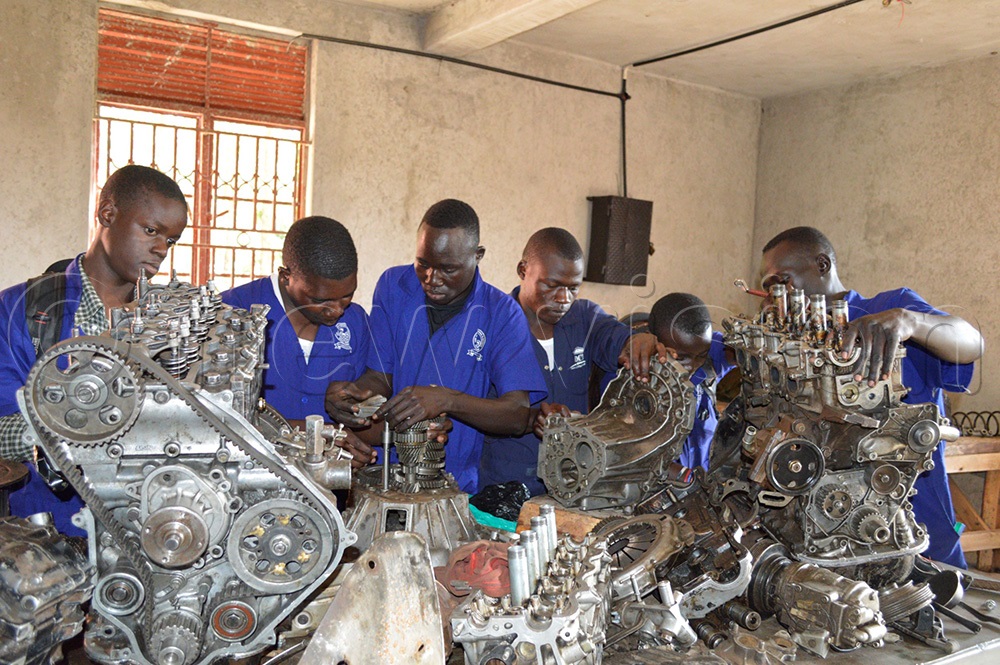
This may include:
- Building construction.
- Bricklaying and concrete practice.
- Plumbing and pipe fitting.
- Electrical installation.
- Solar installation and maintenance.
- Welding and metal fabrication.
- Machining and fitting.
- Motor-vehicle mechanics.
- Motorcycle repair.
- Automotive electronics.
- Refrigeration and air conditioning.
- Electronics repair.
- Computer maintenance.
- Networking.
- Software and digital systems.
- Mechanical maintenance.
- Industrial installation.
- Water and sanitation technology.
- Surveying.
- Drafting and computer-aided design.
- Renewable-energy systems.
- Oil and gas-related technical skills.
- Production and manufacturing technology.
Business Education and Training

This may include:
- Accounting.
- Business administration.
- Procurement.
- Logistics.
- Office administration.
- Records management.
- Entrepreneurship.
- Retail operations.
- Sales and marketing.
- Customer service.
- Cooperative management.
- Banking-support services.
- Digital business.
- Secretarial practice.
- Computerised accounting.
- Small-enterprise management.
Business training should not be separated from practical occupations. A carpenter, mechanic, tailor or electrician who cannot calculate costs, keep records and manage customers may struggle to maintain a profitable enterprise.
Health Science Education and Training

This may include approved certificate and diploma programmes in:
- Nursing.
- Midwifery.
- Medical laboratory-related fields.
- Pharmacy-support fields.
- Public-health support.
- Medical records.
- Physiotherapy-related support.
- Other allied health areas.
Health training is highly regulated because poor practice can endanger life. A learner should never join a health programme merely because an institution has advertised it. The learner must confirm the legal status of the programme and assessment arrangements.
Agriculture Education and Training

This may include:
- Crop production.
- Animal production.
- Poultry.
- Dairy farming.
- Fisheries and aquaculture.
- Forestry.
- Horticulture.
- Agricultural machinery.
- Irrigation.
- Soil and water conservation.
- Food processing.
- Post-harvest handling.
- Farm business management.
- Agricultural extension.
- Seed production.
- Nursery management.
- Beekeeping.
Agricultural TVET should combine production skills with recordkeeping, market understanding, environmental management and value addition.
Home Science, Hospitality and Personal Services

This may include:
- Catering.
- Bakery and pastry.
- Food production.
- Hotel operations.
- Housekeeping.
- Front-office operations.
- Fashion and garment production.
- Tailoring.
- Textile work.
- Hairdressing.
- Beauty therapy.
- Interior decoration.
- Laundry services.
- Childcare and household-support skills.
- Tourism and hospitality services.
These occupations require technical accuracy, hygiene, customer care and business discipline. They should not be treated as casual activities that require no professional training.
Sports Education and Training
Sports-related TVET may include approved programmes in areas such as:
- Coaching.
- Fitness instruction.
- Sports facility operations.
- Sports equipment maintenance.
- Recreation services.
- Sports administration.
- Physical conditioning.
- Event operations.
- Other practical sports occupations.
A person seeking to become a professional coach, fitness instructor or sports-support worker should confirm which qualification and professional requirements apply to the intended role.
Current Levels of TVET
Official reference: TVET Act 2025, particularly sections 30–31.
The 2025 Act establishes two broad levels: lower TVET and upper TVET.
| TVET levelMain provider categoryHighest award identified under the Act | ||
|---|---|---|
| Lower TVET: Vocational Education and Training | Skills Development Centre or Vocational Training Institute | National Craftsperson Certificate and below |
| Upper TVET: Technical Education and Training | Technical College | National Technician Diploma and below |
| Upper TVET: Technical Education and Training | National Polytechnic | National Higher Diploma and below |
| Upper TVET: Technical Education and Training | National Technical University | Degree, postgraduate qualification and below |
These categories and awards are set out in the 2025 Act. Their availability depends on the establishment, licensing and accreditation of the relevant providers and programmes.
Lower TVET
Lower TVET concentrates mainly on practical vocational and craft competence.
It may prepare trainees to work as:
- Artisans.
- Craft workers.
- Skilled operators.
- Service providers.
- Workshop assistants.
- Production workers.
- Self-employed tradespeople.
Upper TVET
Upper TVET provides more advanced technical, supervisory, design, management and technological preparation.
It may prepare trainees for roles such as:
- Technician.
- Senior technician.
- Technologist.
- Supervisor.
- Production planner.
- Technical instructor.
- Project assistant.
- Workshop manager.
- Technical entrepreneur.
A person should not use titles such as technician or technologist merely because he or she has practised a trade for many years. The title should correspond to the recognised level of training, competence and registration.
Different Routes into Skills Training
There is no single route that every learner must follow.
Route 1: Skills training after primary education
Some learners may begin with basic occupational programmes offered at an appropriate Skills Development Centre or Vocational Training Institute.
The exact entry requirement depends on:
- The programme.
- The provider.
- The qualification level.
- The learner’s age.
- Literacy and numeracy requirements.
- Safety demands of the occupation.
A primary school leaver should not be placed in dangerous work for which the learner lacks the maturity, supervision or academic foundation required.
Route 2: Skills training after O-Level
An O-Level leaver may enter programmes such as:
- Electrical installation.
- Plumbing.
- Welding.
- Automotive mechanics.
- Building construction.
- Agriculture.
- Catering.
- Fashion and garment production.
- Business.
- ICT.
- Refrigeration.
- Carpentry and joinery.
The learner should compare entry requirements and progression opportunities before enrolling.
Route 3: Skills training after A-Level
An A-Level leaver may enter advanced certificate, diploma or other technical programmes, depending on the relevant subjects and institutional requirements.
Route 4: Skills training after university
A university graduate may undertake TVET to gain practical abilities that were not sufficiently developed during academic study.
For example:
- A business graduate may study computerised accounting.
- An agriculture graduate may acquire irrigation-installation skills.
- An engineering graduate may study specialised welding or industrial automation.
- A communication graduate may acquire multimedia-production skills.
- A teacher may acquire computer-maintenance or digital-content-production competence.
Route 5: Apprenticeship
An apprentice learns an occupation under an experienced practitioner or employer.
A good apprenticeship should include:
- Defined skills to be learned.
- Suitable supervision.
- Safe working conditions.
- Progressive responsibility.
- Records of training.
- Opportunities for assessment.
- Clear expectations for the learner and employer.
Apprenticeship should not be used as an excuse to obtain unpaid labour while providing little real training.
Route 6: Short and modular training
Short programmes may help learners:
- Gain one specialised competence.
- Upgrade existing skills.
- Learn to use new equipment.
- Respond to technological change.
- Improve safety or quality.
- Prepare for a new service.
A short course may be useful without being equivalent to a national certificate or diploma. The learner should ask exactly what the course leads to.
Route 7: Recognition of prior learning

A person who has acquired skills through informal work may seek formal assessment.
For example, an experienced mechanic may be able to:
- Service engines.
- Repair brakes.
- Diagnose common faults.
- Use tools correctly.
- Deal with customers.
However, the mechanic may lack a recognised certificate.
Under recognition of prior learning, an accredited assessment centre first examines the person’s existing competence. The person may then be submitted for assessment and certification by the relevant assessment board.
Where gaps are identified, the candidate may need additional training before final assessment.
Route 8: Skills upgrading and reskilling
A person who already has a qualification may return for further training.
Upskilling means improving competence in the same occupation.
Reskilling means learning a new occupation or substantially different area of work.
Examples include:
- A vehicle mechanic learning electric-vehicle systems.
- A tailor learning digital pattern design.
- An electrician learning solar installation.
- A farmer learning food processing.
- A bookkeeper learning computerised accounting.
- A photographer learning video editing and drone operations.
- A plumber learning modern water-saving systems.
Competence-Based Assessment and Certification

Official reference: UVTAB: assessment and certification.
The current system is intended to assess what the candidate can actually do.
UVTAB describes its assessment approach as a combination of:
Continuous assessment
- Coursework.
- Industrial training.
- Real-life projects.
Final assessment
- Theory assessment.
- Practical assessment.
Certification
- Award of the relevant recognised qualification after the candidate satisfies the requirements.
Why theory is still important
Competence-based training does not mean that theory is unnecessary.
An electrician needs theory to understand:
- Current.
- Voltage.
- Resistance.
- Load.
- Earthing.
- Circuit protection.
A cook needs theory to understand:
- Food contamination.
- Temperature control.
- Nutrition.
- Storage.
- Ingredient functions.
A mechanic needs theory to understand:
- Combustion.
- Electrical systems.
- Lubrication.
- Cooling.
- Diagnostic information.
Theory helps the worker understand why a task should be performed in a particular way.
Why practical assessment is essential
A person may memorise the steps of welding without being able to produce a strong and safe joint.
Practical assessment requires the candidate to demonstrate competence under controlled conditions.
Why continuous assessment matters
Some abilities cannot be measured adequately during one final examination.
Industrial training and project records may show whether the trainee can:
- Report regularly.
- Keep time.
- Maintain tools.
- Work safely.
- Complete tasks.
- Communicate with supervisors.
- Correct mistakes.
- Work with customers.
- Cooperate with a team.
Provider Licensing and Programme Accreditation
One of the most important changes in the current system is the distinction between licensing and accreditation.
Institutional licensing
A licence gives an institution legal permission to operate as a TVET provider.
Programme accreditation
Accreditation approves a particular programme or course offered by the provider.
A licensed institution is not automatically allowed to offer every course it wishes. Each programme must also be approved.
For example, an institution may be licensed to operate but accredited only for:
- Electrical installation.
- Plumbing.
- Building construction.
That does not automatically give it permission to offer nursing, laboratory technology or automotive engineering.
The TVET Council clearly states that institutional licensing and programme accreditation are separate requirements.
Assessment-centre accreditation
A provider may deliver training but still need the appropriate approval to register and assess candidates.
Learners should confirm that they will be registered through a recognised assessment centre.
Trainer registration and licensing
The 2025 Act provides for registration and licensing of TVET trainers. Ask the provider for evidence of its trainers’ qualifications and current regulatory status. Use the TVET Council’s current notices and application information to check the applicable requirements.
Four Questions Every Applicant Should Ask
Before paying fees, a learner or parent should ask:
- Is this training provider licensed?
- Is this particular programme accredited?
- Which recognised body will assess and certify the trainee?
- Is the assessment centre accredited for that programme?
A signpost, business-registration certificate or attractive brochure is not enough evidence of recognised TVET status.
Public and Private Providers
Public providers
Public TVET providers are established or operated by government.
They may include:
- Skills Development Centres.
- Vocational Training Institutes.
- Technical Colleges.
- Specialised colleges.
- Other institutions established under the current framework.
Public ownership does not remove the need for quality workshops, qualified trainers, proper management and programme accreditation.
Private providers
Private providers may be established by:
- Individuals.
- Companies.
- Religious organisations.
- Foundations.
- Non-governmental organisations.
- Community organisations.
- Industry associations.
A private provider must apply to the TVET Council for the appropriate licence and programme accreditation.
The law requires a licensing proposal to provide information about the institution’s location, governance, finances, trainers, intended programmes and accessible facilities such as workshops, laboratories, equipment and library services.
Workplace-based providers
A company or enterprise may contribute to training through:
- Apprenticeship.
- Industrial attachment.
- Staff upgrading.
- Equipment-specific instruction.
- Workplace assessment.
- Structured trainee programmes.
Workplace training should be connected to recognised occupational standards where a national qualification is intended.
Faith-based and community providers
Faith-based and community organisations have made important contributions to practical education. Under the present framework, their programmes must meet the same quality and regulatory expectations that apply to other providers.
Industrial Training and Apprenticeship

Industrial training allows learners to apply institutional learning in an actual workplace.
It helps a trainee understand:
- Real production deadlines.
- Workplace safety.
- Customer expectations.
- Equipment maintenance.
- Communication with supervisors.
- Teamwork.
- Quality requirements.
- Professional discipline.
- Stock and material control.
- The consequences of mistakes.
What a good industrial attachment should provide
A meaningful placement should include:
- A named workplace supervisor.
- Defined learning objectives.
- Appropriate duties.
- Safety orientation.
- Access to relevant tools or systems.
- A logbook or evidence record.
- Feedback from the workplace.
- Monitoring by the training provider.
- Assessment of the learner’s progress.
A trainee who spends the entire attachment period carrying messages, cleaning unrelated areas or observing without meaningful participation may not acquire the expected competence.
Responsibilities of the learner
The learner should:
- Report on time.
- Dress appropriately.
- Observe safety rules.
- Protect tools and materials.
- Ask relevant questions.
- Keep accurate records.
- Respect confidential information.
- Avoid pretending to know tasks that have not been mastered.
- Accept correction.
- Report hazards and serious misconduct.
Responsibilities of the employer
The employer should:
- Provide proper supervision.
- Assign relevant tasks.
- Avoid exposing learners to uncontrolled danger.
- Respect the dignity of trainees.
- Give honest performance feedback.
- Prevent harassment and exploitation.
- Allow trainees to develop gradually.
Skills Training and Entrepreneurship

Many TVET graduates expect to become self-employed. Technical skill is necessary, but it is not enough to maintain a successful business.
A trained worker may fail in business because of:
- Poor costing.
- Mixing business and personal money.
- Weak customer service.
- Failure to keep records.
- Buying unsuitable equipment.
- Giving too much credit.
- Underpricing.
- Poor-quality work.
- Failure to honour deadlines.
- Lack of marketing.
- Unsafe working practices.
- Failure to plan for repairs and replacement of tools.
Enterprise abilities every trainee should develop
A trainee should learn how to:
- Identify a customer problem.
- Estimate materials.
- Calculate labour costs.
- Prepare a quotation.
- Issue a receipt.
- Keep sales and expense records.
- Set a sustainable price.
- Manage stock.
- Communicate with customers.
- Manage complaints.
- Market services honestly.
- Use mobile and digital payments safely.
- Separate personal and business money.
- Save for new tools.
- Maintain quality standards.
- Comply with relevant regulations.
Illustrative scenario: The newly trained welder
Peter completes a welding course and borrows money to open a workshop.
He buys an expensive welding machine but forgets to budget for:
- Protective equipment.
- Electricity connection.
- Rent.
- Electrodes.
- Grinding discs.
- Paint.
- Transport.
- Repairs.
- Marketing.
- Working capital.
After several weeks, he has a machine but cannot complete customer orders.
Good skills training should therefore prepare Peter not only to weld but also to plan and manage the enterprise.
Selecting a Course According to Current Opportunities
A learner should not select a course simply because it is fashionable or because a friend has joined it.
The learner should investigate:
- Economic activities in the district.
- Employers operating nearby.
- Skills that local businesses struggle to find.
- Availability of industrial attachment.
- Tools required for self-employment.
- Competition within the occupation.
- Customer ability to pay.
- Possibilities for further training.
- Changes in technology.
- Safety and regulatory requirements.
Areas connected to current development priorities
Investigate local demand alongside national priorities such as value addition, infrastructure, production and enterprise development. The following areas are worth researching; they do not establish that every occupation has vacancies in every district:
- Agro-processing.
- Manufacturing.
- Construction.
- Electrical and renewable-energy systems.
- Water and sanitation.
- Transport maintenance.
- Logistics.
- ICT and digital services.
- Tourism and hospitality.
- Mineral and petroleum-support services.
- Agricultural production.
- Fisheries.
- Food handling and processing.
- Health-support occupations.
- Business and enterprise services.
These are broad areas of national importance, not promises that every course in those areas will automatically produce a job.
Illustrative Scenario 1: An O-Level Leaver Interested in Electrical Work

Daniel completes Senior Four and wants to study electrical installation.
Before enrolling, he and his parent should establish:
- Whether the provider is licensed.
- Whether electrical installation is accredited.
- Which qualification the course leads to.
- Which body will assess him.
- Whether the institution has a functioning electrical workshop.
- Whether trainees receive enough tools and materials.
- Whether trainers are qualified.
- Where industrial attachment takes place.
- Whether safety equipment is provided.
- The complete cost of training.
- Whether he can progress to a higher qualification.
During training, Daniel should learn:
- Electrical theory.
- Wiring.
- Testing.
- Earthing.
- Circuit protection.
- Load estimation.
- Drawing interpretation.
- Fault diagnosis.
- Solar fundamentals.
- Customer communication.
- Safety.
A course that teaches him to connect wires without testing, protection and safety procedures would be inadequate.
Illustrative Scenario 2: An Experienced Informal Mechanic
Grace has worked in a motorcycle garage for eight years.
She can:
- Service engines.
- Replace brake components.
- Trace common electrical faults.
- Repair tyre problems.
- Deal with customers.
- Estimate basic repair costs.
However, she has no recognised qualification.
Grace may approach an accredited assessment centre and request recognition of prior learning. The centre should first examine her existing competence. It may identify areas in which she needs additional preparation, such as:
- Technical calculations.
- Electronic diagnostic systems.
- Environmental handling of oils.
- Occupational safety.
- Documentation.
- New motorcycle technologies.
After addressing gaps, she may be submitted for the relevant assessment and certification.
Recognition of prior learning values her experience without pretending that experience alone automatically proves every required competence.
Illustrative Scenario 3: A Learner Joining a Health Programme
Maria sees an advertisement for a two-year medical course at a newly opened institution.
The institution claims that she will qualify to work in any hospital.
Before paying, Maria should confirm:
- Whether the provider is legally recognised.
- Whether the exact health programme is approved.
- Whether UHPAB assesses the programme.
- Whether the institution appears on the relevant official records.
- Whether practical training sites are available.
- Whether laboratories are functional.
- Whether graduates are eligible for the next professional step.
- Whether the promised job title is legally accurate.
Because health work affects patients’ lives, Maria should not rely on verbal promises from a recruiter.
Illustrative Scenario 4: A University Graduate Seeking Practical Skills
John has a degree in business administration but struggles to obtain employment because his practical digital abilities are weak.
He decides to study:
- Computerised accounting.
- Spreadsheet analysis.
- Digital marketing.
- Customer-relationship-management systems.
- Basic data presentation.
TVET does not replace his degree. It adds practical competence that may make his academic knowledge more useful.
Financing Skills Training
Skills training involves more than tuition.
A learner may need to budget for:
- Registration fees.
- Assessment fees.
- Tools.
- Protective clothing.
- Training materials.
- Industrial attachment.
- Transport.
- Meals.
- Accommodation.
- Internet or data.
- Project materials.
- Graduation and certification charges.
Skills Development Fund
The 2025 Act establishes a Skills Development Fund intended to finance priority training, industrial placements, a TVET loan scheme and innovation-incubation programmes. Both private and public providers may potentially benefit under the arrangements established for the Fund.
However, the establishment of a fund in law does not mean that every trainee can immediately receive money. Regulations, funding releases, eligibility requirements and application procedures must be operational.
Before relying on financial support, obtain the current official application notice, eligibility conditions and details of what is actually funded. An institutional promise of future support should be checked with the administering body.
Higher Education Students Financing Scheme
The Higher Education Students Financing Scheme supports eligible Ugandans in selected accredited undergraduate diploma and degree programmes. Check the approved course and institution lists, financial-need requirements and costs covered by the relevant call.
It does not automatically cover every craft certificate, informal apprenticeship or short course. Applicants must satisfy the current eligibility rules and respond to an official call.
Other possible sources of support
Depending on the programme and year, support may come from:
- Government sponsorship.
- District or institutional bursaries.
- Religious organisations.
- Employers.
- Development partners.
- Non-governmental organisations.
- Family contributions.
- Savings.
- Cooperative or SACCO financing.
- Training-with-production arrangements.
Learners should use official notices and avoid people who demand unexplained payments in exchange for promised sponsorship.
Choosing a Good Training Provider
Use this checklist before paying fees.
- Confirm the provider’s current TVET Council licence.
- Confirm that the exact course is accredited.
- Identify the qualification awarded at completion.
- Identify the recognised assessment body.
- Confirm that candidates are registered through an accredited assessment centre.
- Inspect the workshop, laboratory or training facility.
- Ask how many trainees share each machine or equipment set.
- Check whether training materials are regularly available.
- Confirm the qualifications and experience of trainers.
- Ask where industrial attachment takes place.
- Confirm how practical work is assessed.
- Request the full fee structure in writing.
- Ask about tools, uniforms, materials and assessment charges.
- Check safety procedures and protective equipment.
- Ask how the qualification leads to further study.
- Speak to current trainees and recent graduates.
- Examine real projects completed by trainees.
- Verify claims about employment partnerships.
- Avoid institutions that guarantee jobs without evidence.
- Obtain receipts for all payments.
A provider should be willing to answer these questions clearly.
Current Challenges Facing TVET
1. Transition to the new framework
Official reference: Parliament report dated 10 April 2026.
The law changed significantly in 2025, but institutional licensing, trainer regulation, new curricula, Sector Skills Expert Committees and other arrangements require time and resources to become fully operational.
In April 2026, Parliament reported that only 76 institutions had been inspected out of 239 licensing applications inherited for review, while the TVET Council was operating with only about 10 per cent of its approved staffing structure. Parliament also raised concern about delays in the new curriculum and licensing process.
Learners should therefore expect that some providers may still be moving from old arrangements into the new system.
2. Unequal quality among providers
Some institutions have strong workshops, qualified trainers and employer partnerships.
Others may have:
- Too little equipment.
- Large practical classes.
- Insufficient materials.
- Outdated machines.
- Weak industrial attachment.
- Few qualified trainers.
- Poor safety systems.
Licensing and accreditation are intended to reduce these differences, but families should still inspect institutions personally.
3. Cost of practical training
High-quality training requires tools, consumable materials, machinery, electricity, laboratories and workplace supervision.
An institution that charges very low fees may still fail to provide sufficient practical experience. At the same time, high fees do not automatically guarantee quality.
4. Limited industrial attachment opportunities
Some employers are reluctant to receive trainees because of:
- Safety concerns.
- Limited space.
- Cost of supervision.
- Risk of equipment damage.
- Confidentiality.
- Lack of structured partnerships.
Providers should establish reliable relationships with workplaces instead of leaving every trainee to search alone.
5. Changing technology
Occupations are changing rapidly.
Examples include:
- Electric and computer-controlled vehicles.
- Solar-energy systems.
- Digital manufacturing.
- Computerised accounting.
- Mobile financial services.
- Automated agricultural equipment.
- Artificial intelligence.
- Digital customer records.
- New building materials.
- Electronic diagnostic tools.
Training based entirely on outdated tools may leave graduates unprepared.
6. Negative attitudes towards vocational work
Some families continue to consider TVET a route for academically weak learners.
This attitude can push young people into academic courses that do not suit their interests while the country continues to need skilled technicians, craftspeople and service professionals.
7. Gender barriers
Girls and women may face discouragement when entering areas such as:
- Welding.
- Electrical installation.
- construction.
- Automotive mechanics.
- ICT.
- Mechanical maintenance.
Boys may also be discouraged from entering occupations such as catering, fashion, beauty services or care-related training.
Career choice should be based on ability, interest, safety and opportunity rather than restrictive gender stereotypes.
8. Access for persons with disabilities
A provider may advertise inclusion while lacking:
- Ramps.
- Accessible toilets.
- Interpreters.
- Appropriate equipment.
- Adapted learning materials.
- Flexible assessment arrangements.
- Safe workshop access.
Parents and learners should confirm the actual support available.
9. Weak connection between training and enterprise
Some trainees complete technical courses without learning how to find customers, prepare quotations, keep records or manage money.
A technically competent graduate may therefore remain unemployed or operate an unsustainable business.
Guidance for Learners
Choose a skill that matches your abilities
Ask yourself:
- Do I enjoy repairing things?
- Do I enjoy making products?
- Do I enjoy working with people?
- Do I prefer indoor or outdoor work?
- Am I comfortable with tools and machines?
- Do I enjoy calculations?
- Am I patient with detailed work?
- Do I enjoy food, clothing, agriculture, technology or construction?
- Do I want employment, self-employment or both?
Do not select a course by title alone
Investigate what trainees actually do during the course.
“Computer studies,” for example, may refer to:
- Basic computer use.
- Hardware repair.
- Networking.
- Programming.
- Graphic design.
- Data management.
- Office applications.
These lead to different abilities and opportunities.
Take safety seriously
Protective equipment is not a decoration.
Depending on the occupation, a trainee may need:
- Overalls.
- Safety boots.
- Gloves.
- Eye protection.
- Hearing protection.
- Respiratory protection.
- Helmets.
- Food-hygiene clothing.
- Life jackets.
- Electrical isolation equipment.
Build a portfolio
Keep evidence of your work, including:
- Photographs.
- Drawings.
- Designs.
- Project reports.
- Customer assignments.
- Logbooks.
- Computer files.
- Videos of demonstrations.
- Quotations and costing exercises.
- Records of industrial attachment.
A portfolio can show an employer or customer what you can do.
Develop communication skills
A skilled person should be able to:
- Explain a fault.
- Receive instructions.
- Prepare a report.
- Write a quotation.
- Advise a customer.
- Ask for clarification.
- Report a safety problem.
- Work with a team.
Continue learning
Completion of one course should not mark the end of learning.
Technology, safety requirements and customer expectations will continue changing.
Guidance for Parents and Guardians

Parents should:
- Respect practical ability.
- Avoid describing TVET as education for failures.
- Visit institutions before paying fees.
- Verify licensing and accreditation.
- Discuss complete costs.
- Support both daughters and sons in technical fields.
- Encourage punctuality and discipline.
- Help learners obtain basic tools where possible.
- Monitor industrial attachment arrangements.
- Ask learners to demonstrate what they have learned.
- Encourage saving and enterprise planning.
- Avoid choosing a course only because it appears prestigious.
A child who enjoys repairing bicycles may have the foundation for mechanical or automotive work.
A child who enjoys sewing may progress into garment technology, production management or fashion enterprise.
A child who enjoys cooking may progress into bakery, food production, hospitality or food processing.
Practical interests should be developed, not dismissed.
Guidance for Teachers and Career-Guidance Officers
Teachers should present TVET as a respected education pathway.
Connect school subjects to occupations
Mathematics
Relate Mathematics to:
- Measurement.
- Costing.
- construction.
- Electrical calculations.
- Pattern design.
- Production quantities.
- Business records.
Physics
Relate Physics to:
- Electricity.
- Machines.
- Motors.
- refrigeration.
- Vehicle systems.
- Energy.
- construction.
Chemistry
Relate Chemistry to:
- Food processing.
- Soap production.
- Paint.
- Water treatment.
- Welding materials.
- Agriculture.
- Beauty products.
Biology
Relate Biology to:
- Health.
- Food hygiene.
- Agriculture.
- Fisheries.
- Forestry.
- Animal production.
- Nutrition.
ICT
Relate ICT to:
- Computer repair.
- Digital design.
- Stock systems.
- business records.
- Marketing.
- Computer-aided design.
- diagnostics.
- Automation.
Entrepreneurship
Relate entrepreneurship to:
- Customer research.
- Pricing.
- quotations.
- profit.
- recordkeeping.
- enterprise planning.
- quality.
- marketing.
Organise career exposure
Schools can arrange:
- Visits to training institutions.
- Workshop demonstrations.
- Talks by artisans and technicians.
- Industrial visits.
- Skills exhibitions.
- Short holiday courses.
- Career interviews.
- Learner enterprise projects.
- Repair and design challenges.
- Meetings with employers.
Teachers should invite successful craft workers and technicians as well as university professionals.
Common Misunderstandings About TVET
“TVET is only for school failures.”
TVET is suitable for people who want practical, technical and occupational competence. University graduates and employed professionals may also undertake TVET.
“A short course is the same as a national certificate.”
A short course may teach a useful skill, but its duration and status do not automatically make it a full national qualification.
“Any registered company can issue a national qualification.”
Business registration does not equal TVET licensing, programme accreditation or assessment authority.
“Informally trained workers have no value.”
Informal experience can be valuable. The current system provides a route through which such competence may be assessed and recognised.
“An experienced worker does not need assessment.”
Experience is important, but recognised assessment helps confirm that the worker meets occupational, quality and safety standards.
“A certificate guarantees employment.”
A qualification supports employment, but does not guarantee it. Employers also consider competence, conduct, experience and workplace demand.
“Self-employment begins immediately after graduation.”
Starting a sustainable enterprise may require tools, working capital, customers, records, licences, suitable premises and business discipline.
“Old BTVET certificates are now invalid.”
Valid certificates, diplomas and awards issued under the former system continue in force under the transition provisions of the 2025 Act.
“TVET and university education cannot be combined.”
A person may combine academic education with practical occupational training at different stages of life.
A Realistic Career-Development Ladder
A learner may progress through a pathway such as:
Basic occupational training → Craft qualification → Employment or apprenticeship → Skills upgrading → Technician-level training → Supervisory responsibility → Higher technical training → Enterprise ownership or management
Progression is not automatic.
It normally requires:
- Recognised qualifications.
- Demonstrated competence.
- Work experience.
- Good conduct.
- Further assessment.
- Financial preparation.
- Continued learning.
A skilled craft worker can build a respected and profitable career without becoming a university graduate. Similarly, a craft worker who wishes to progress into advanced technical or professional roles should be able to follow a recognised learning pathway.
Your Next Step
Choose two actions you can complete this week: visit a recognised provider, check a programme’s status, compare complete costs, speak to a practitioner or review evidence of your own skills. Discuss what you find with a teacher, parent, employer or careers adviser.
A useful qualification should connect to competence you can demonstrate. Keep a record of your work, ask for feedback and plan how your next training step will improve your ability to work safely, serve customers and continue learning.
TVET Mini-Quiz
Answer all six questions.
1. What does TVET stand for?
2. Which statement best describes competence-based training?
3. Is a licensed institution automatically allowed to offer every course?
4. What is recognition of prior learning?
5. Which is a sign of a meaningful industrial attachment?
6. Why should a TVET trainee learn entrepreneurship?
Before I Join a TVET Course
Tick the actions you have completed. This checklist can save your progress in this browser.
0/8 completed
Your browser will report whether checklist progress can be saved.
Videos for Learners, Parents and Career Teachers
Use these videos to see the current reforms and discuss what good skills training should look like.
TVET Act 2025: New Council and Assessment Boards
UBC Television Uganda explains the new institutions created under the reform.
Open on YouTubeMarket-Driven Skills and Youth Employability
Use this video to discuss why employer needs and labour-market demand matter in TVET.
Open on YouTubeVocational Skills Fair in Uganda
See how vocational training is being promoted as a route to practical competence and employment.
Open on YouTubeWhy Licensing and Accreditation Matter
NTV Uganda coverage helps learners and parents understand why legal recognition must be checked before paying fees.
Open on YouTubeOfficial Sources and Further Reading
Reviewed on 28 October 2026. Admission rules, funding calls and assessment schedules can change. Match every notice to your programme, centre and intake.
- TVET Council: licensing, programme accreditation, trainer requirements and notices.
- Licensed private providers and accredited programmes: check both the provider and the exact programme.
- Ministry of Education and Sports: TVET adverts and circulars: current admissions and training documents.
- UVTAB: vocational and technical assessment; also see current circulars and assessment-centre accreditation.
- UHPAB: allied-health, nursing and midwifery assessment information.
- Technical and Vocational Education and Training Act, 2025: the statutory framework.
- Higher Education Students Financing Scheme: official eligibility, covered programmes and application information.
- UBOS: Uganda profile: labour-market indicators, including NEET.
Photos are credited beside the relevant image. They illustrate training activities and do not establish a provider’s current licence or programme accreditation. Verify recognition separately.


Thanks for your helpful information. and we want more.
ReplyDelete